Gifu, Japan · The Northern Alps
Car Hire for Okuhida and the Japan Alps 2026
Hire a car for Okuhida when it supports a wider road itinerary and every driver is prepared for the conditions. Check licence documents, winter equipment, luggage space and ryokan parking before booking. A car does not remove Kamikochi’s private-vehicle restrictions, seasonal road closures or the ropeway’s weather-dependent operation.
Some booking links may earn us a commission at no extra cost to you. How we fund this guide.
Do you need a rental car for Okuhida?
You do not need to hire a vehicle solely because Okuhida is in the mountains. First compare the Nohi Bus route with the villages and attractions you actually want to visit. A car becomes more useful when your itinerary includes several places that do not fit comfortably around the available departures.
The Okuhida regional guide helps you choose a base before deciding about transport. If your plan is mainly to arrive at a ryokan, spend an evening there and visit one attraction, public transport may keep the trip simpler. A wider journey through several accommodation bases creates a different comparison.
Judge the car against the complete holiday, including collection, return, parking and driving days. Hiring a vehicle for a period when it sits at a ryokan can add practical tasks without providing much useful flexibility. Conversely, a carefully arranged road section may suit a family whose luggage and preferred stops would make repeated bus changes difficult.
This guide helps you decide what to verify. It does not provide a ready-to-book rental supplier link or claim that a particular vehicle is available. The car-hire booking slot remains inactive until the owner supplies an approved destination.
Where should you collect and return the vehicle?
Compare collection in Takayama or Matsumoto with starting in a larger gateway city, and choose the arrangement that limits unnecessary driving. The right answer depends on the direction of your trip, available branch arrangements and how comfortable the driver is after the arrival journey.
Takayama can make sense when you approach by railway and want the car only for the mountain section. Matsumoto may suit an east-side arrival or the end of a crossing itinerary. A larger-city pickup can work for a longer road trip, but it also adds urban driving and a longer first day behind the wheel.
| Rental shape | Potential advantage | Detail to confirm |
|---|---|---|
| Return to the same gateway | Simple collection and return plan | Whether backtracking fits the holiday |
| Collect west, return east | Crossing itinerary | Branch acceptance and one-way conditions |
| Short mountain-only rental | Limits unused rental days | Opening hours and connection margins |
| Longer regional road trip | More independent stops | Parking and driver workload throughout |
Check the exact branch, opening arrangements and return procedure before purchasing railway tickets around the rental. A brand operating in both cities does not establish that your selected vehicle can be returned to any branch you choose.
Which driving documents do you need to check?
Ask the rental company to confirm the documents required for every named driver before booking. Eligibility depends on the licence and supporting document arrangement; a translated phrase on a third-party website is not enough to establish that your paperwork will be accepted.
Nippon Rent-A-Car’s official guidance lists accepted licence categories and directs customers to its current driving-document instructions. Use a rental company’s own requirements for the specific driver rather than assuming an International Driving Permit from any issuer is interchangeable with every other document.
Check names, validity, original-document requirements and any translation rules before leaving home. If more than one person may drive, resolve the arrangement for all of them. Carrying a second licence is not the same as being registered to drive the rental vehicle.
Keep the reservation separate from the eligibility check. A website accepting a booking does not prove that a counter will release a vehicle when the required documents are missing. Send the rental company a clear document question early enough to correct a problem before travel.
What car size and equipment should you choose?
Choose a vehicle for the people, bags and equipment travelling together, then confirm the actual class and luggage capacity with the supplier. A seat count alone does not establish that a family’s suitcases will fit while every passenger remains comfortably seated.
List the luggage dimensions and any stroller or mobility equipment before selecting a class. If the supplier gives only representative models, ask what practical capacity can be confirmed. Do not design the entire trip around a specific boot shape shown in an example photograph.
Check child-restraint requirements and reserve appropriate equipment through the supplier for the children travelling. Give the relevant details and ask about fitting and availability rather than assuming every branch has every size ready. Keep the collection day comfortable enough to resolve a fitting question without rushing away.
Also ask about navigation language, charging needs and the equipment included with the chosen class. A feature available in one example vehicle may not apply to another vehicle in the same category. Keep offline directions and the property’s Japanese address as a practical backup.
What matters most for winter driving?
Confirm winter tyres and any additional equipment required for your route with the rental company, even if collecting the vehicle in a city without snow. Supplier guidance explicitly says that driving into snowy areas requires suitable winter equipment; the pickup location’s weather does not decide the mountain journey.
Ask whether the equipment is included, must be reserved or changes which vehicle class is available. Confirm what the supplier expects you to do if conditions worsen. Do not assume that selecting four-wheel drive replaces the need for suitable tyres, sound judgement or a driver comfortable with snow and ice.
Plan a modest driving day with time to reach the accommodation before dark if that suits your experience. Keep warm clothing and essentials accessible in the vehicle. If conditions exceed the driver’s comfort, changing the itinerary is a better response than continuing because a hotel booking exists.
The Okuhida winter guide should be read alongside the rental information. An onsen stay can still be worthwhile with fewer road excursions, so choose accommodation you will enjoy if the driving plan needs to shrink.
How do you approach the ropeway by road?
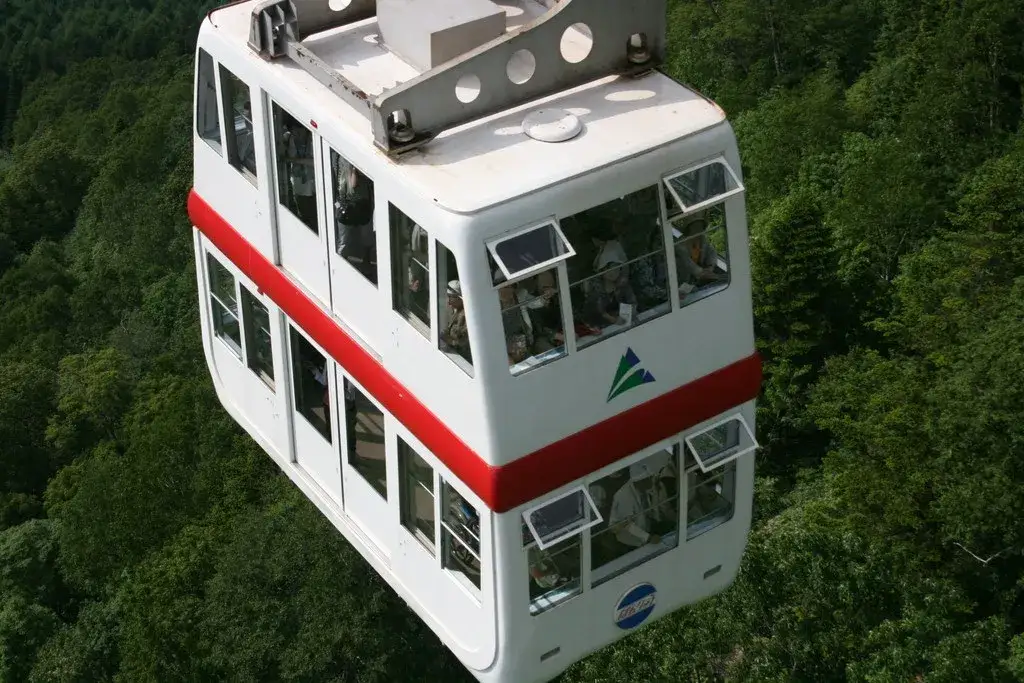
Follow Shinhotaka Ropeway’s official access instructions and current parking notices, then match the car park to the route you intend to use. The operator identifies the approach from Takayama using National Routes 158 and 471 and Prefectural Route 475; current closures and local instructions still take precedence.
Do not enter a car park name into navigation without checking its seasonal availability. The operator distinguishes lower and intermediate parking, with restrictions during snowy periods. A route saved from a summer visit may not be appropriate in winter.
Choose parking for the actual sightseeing visit rather than a mountain-climbing plan. Different arrangements can apply, and staying overnight elsewhere does not authorise leaving the vehicle wherever it is most convenient.
Read the Shinhotaka Ropeway guide before planning the day. Driving gives control of arrival time, but it does not remove gondola queues, maintenance closures, wind suspension or poor visibility. Keep a useful alternative rather than treating the car as a guarantee of a successful mountain view.
Can you drive directly into Kamikochi?
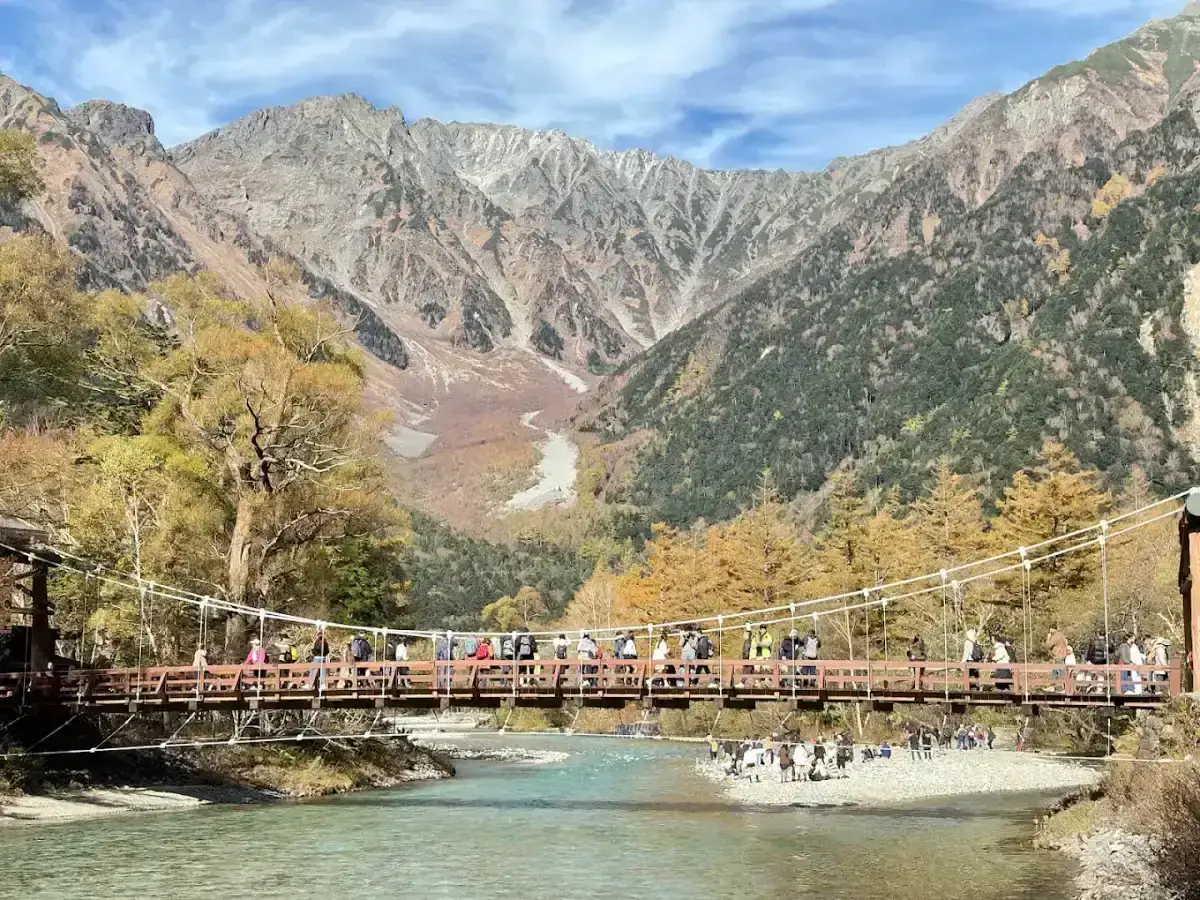
No: private cars cannot enter Kamikochi’s visitor area. Plan the approved transfer from the appropriate access parking area by bus or taxi, and verify the current arrangements from the official destination sources before travelling.
The official English access information distinguishes the western Hirayu approach and eastern Sawando approach. The correct choice depends on the direction you are travelling, but neither should be treated as permission to drive to Kappa Bridge or a hotel inside the restricted area.
A rental car can therefore help reach the access point while still creating a separate public-transport stage. Include parking, transferring, retrieving the vehicle and continuing to the ryokan in the day’s plan. Do not calculate only the time spent walking in Kamikochi.
Check the Kamikochi visit guide for seasonal planning. Winter is not an ordinary drive-in sightseeing alternative, and the visitor season does not mean every facility or path is open on every date.
What should you ask a ryokan about parking?
Ask whether parking is available for your booking, where the entrance is and whether any vehicle-size or arrival instructions apply. A booking platform’s parking label is less useful than the property’s direct instructions for the particular approach you will use.
Send the accommodation your likely arrival direction and time. If the road or entrance can be confusing, ask for the destination to use in navigation and a contact procedure. Do not assume a map pin identifies the best entrance, especially when a property has several buildings or approaches.
In snow conditions, ask about the practical arrival route rather than only whether the property has parking. A space existing does not establish that every driver will be comfortable reaching it or moving luggage from it.
Keep dinner arrangements in the plan. A car makes it tempting to add another stop, but the accommodation may still need you at a defined time. The point of a ryokan stay is often the evening itself; protect that time rather than arriving at the last possible moment.
How should you compare rental conditions?
Read the supplier’s current coverage, excess, roadside-assistance and return conditions before deciding. Ask about unclear terms with a concrete scenario, such as a late return, a damaged tyre or a change of branch. This is more useful than assuming a broad insurance label answers every question.
Confirm who to call after an incident and which steps the rental company requires. Keep those instructions accessible offline, along with the branch details and vehicle paperwork. Do not wait until reception becomes difficult in the mountains to search through a booking email.
Check fuel and return procedures for the chosen branch. Leave time for the final tasks before a train reservation, and do not schedule the car return at the same moment as the railway departure. If branch hours constrain the day, adjust the itinerary before booking attractions.
The most convenient rental is not necessarily the one with the simplest initial search result. It is the arrangement whose documents, equipment, luggage, branches and conditions fit the whole journey without hidden practical dependencies.
When is the bus the better decision?
Prefer public transport when the bus route fits your main stops and hiring a car would create more work than useful freedom. A direct village arrival, a ryokan evening and a single ropeway outing can form a complete trip without adding a road circuit.
The Takayama-to-Okuhida guide explains the western arrival, while the Matsumoto route offers another gateway. Compare those specific journeys before deciding that the region requires a vehicle. A timetable is restrictive only when it conflicts with the trip you actually want.
If the car remains the better choice, finish the plan before booking: named drivers and documents, confirmed winter equipment where needed, suitable vehicle capacity, agreed collection and return branches, and direct ryokan parking instructions. Once those are clear, the extra flexibility can support a thoughtful itinerary instead of a hurried series of optional stops.
Who should avoid driving in the mountains?
Anyone who is uneasy about driving on the left, narrow roads or winter conditions should seriously consider the bus. A rental adds responsibility as well as freedom, and a mountain itinerary tests it more than a city transfer does. A confident driver on a dry summer day is in a very different position from a first-time visitor arriving in snow.
Think about the whole party, not only the driver. If only one person is registered to drive, that person carries every kilometre, and fatigue on the way to an onsen evening defeats the purpose of the stay. Registered drivers, planned rest stops and a conservative daily distance help more than an ambitious map.
Remember too that a ryokan stay often involves a drink with dinner. Decide in advance who will not be driving later, and never plan to do so after drinking. If that constraint makes a car awkward for your itinerary, the Takayama-to-Okuhida bus guide offers a simpler arrival.
How should you handle navigation, fuel and tolls?
Set up navigation before you leave the branch and confirm its language and destination-entry method with the staff. Japanese addresses and phone numbers for your ryokan are often the most reliable input, so keep them saved offline. A map link opened on a phone is not a substitute if mobile coverage drops in a valley.
Ask the rental company about fuel type, where to refuel near the return branch and whether an electronic toll arrangement is available or must be requested. Rural fuel stops can be less frequent than in cities, so refuel before heading into the mountains rather than waiting for the warning light.
Leave a margin before the return branch’s closing arrangements and any train reservation. For 2026 itineraries built around winter or autumn, shorter daylight and slower mountain driving make that margin more important than a tight schedule that looks efficient on paper.
Your questions, answered
Do I need a rental car for an Okuhida ryokan stay?
Compare the bus route with your actual accommodation and attractions first. A car can help with a wider road itinerary, but a ryokan-focused stay may work well by public transport. Include collection, return, parking and the driver’s workload in the comparison rather than measuring convenience only by travel distance.
Are winter tyres necessary if I collect the car in a city?
Confirm winter equipment with the rental supplier for every area you plan to enter. Supplier guidance says snowy-road driving requires suitable tyres even when the collection area has no snow. Do not assume the pickup location’s standard equipment or a four-wheel-drive label is enough for your mountain itinerary.
Can I drive my rental car into Kamikochi?
Private cars cannot enter the visitor area, so plan the approved bus or taxi transfer from the relevant access point. Check the current official information for the Hirayu or Sawando approach. Include parking and retrieving the vehicle in the day, as well as the time you intend to spend walking.
Can I collect in Takayama and return in Matsumoto?
Ask the rental company about the selected branches, vehicle class and one-way conditions before designing the route around this arrangement. A brand operating in both cities does not guarantee that every booking allows any return branch. Confirm branch hours and leave a comfortable margin before onward railway reservations.
Which driving licence documents should I bring?
Use the rental company’s current instructions for the actual licence held by each driver, including any permit or translation requirements. Confirm original-document and validity rules before departure. An accepted online reservation is not proof the counter can release the vehicle if the driver’s paperwork is incomplete or unsuitable.
Is driving in Okuhida difficult for visitors from right-hand-traffic countries?
Japan drives on the left, so confirm you are comfortable with that before booking. Mountain roads, tunnels and narrow village streets add workload, especially in rain, fog or snow. If the first hours would be stressful, collect the car later in the trip, share the driving among registered drivers or choose the bus for the mountain section.