Gifu, Japan · The Northern Alps
Tochio Onsen guide 2026
Tochio Onsen is worth considering for an Okuhida stay when its smaller accommodation options fit your needs. Compare the actual room, meals and bathing arrangements, then confirm the bus stop and final approach. Treat riverside baths and walks as separate plans that need current local checks.
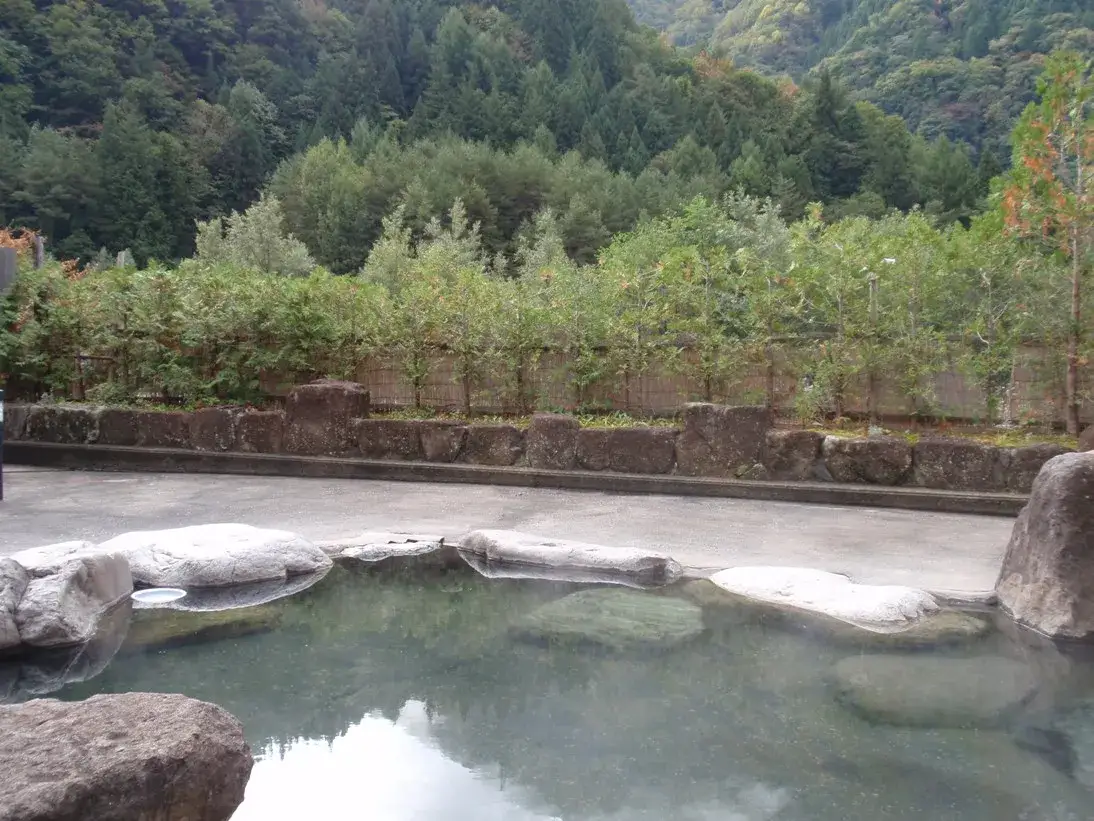
Archive view of Kojin no Yu in Tochio Onsen. Confirm current access and bathing rules before visiting. · Soica2001 · Public domain · Wikimedia Commons · Resized and converted to WebP
Some booking links may earn us a commission at no extra cost to you. How we fund this guide.
Why consider Tochio Onsen for your Okuhida stay?
Consider Tochio when a smaller, less elaborate accommodation style appeals and you are willing to choose the stay by its actual facilities. It can be a useful alternative to focusing only on the better-known ryokan names, but the village name is not a promise of a particular budget or level of service.
Tochio is one of the five hot-spring areas in Okuhida Onsen-go, within Takayama City in Gifu Prefecture. The tourism association describes its river setting and a tradition of modest inns and home-style meals. Those descriptions explain the area’s character without establishing what every accommodation currently offers. Check the individual property before assuming dinner, private bathing or a particular room setup is included.
A Tochio booking makes most sense when you have found a property that fits how you travel. That may mean a comfortable sleeping arrangement, meals the kitchen can provide or a practical arrival. It makes less sense to select it only because an old comparison called it inexpensive. Current availability and room plans need to be checked for your own dates.
Use the Okuhida regional guide to compare the five villages. Tochio belongs in that choice as a genuine place to stay, with its own practical questions, rather than a fallback chosen after every other property disappears from search.
How does Tochio compare with Hirayu and Shin-Hotaka?
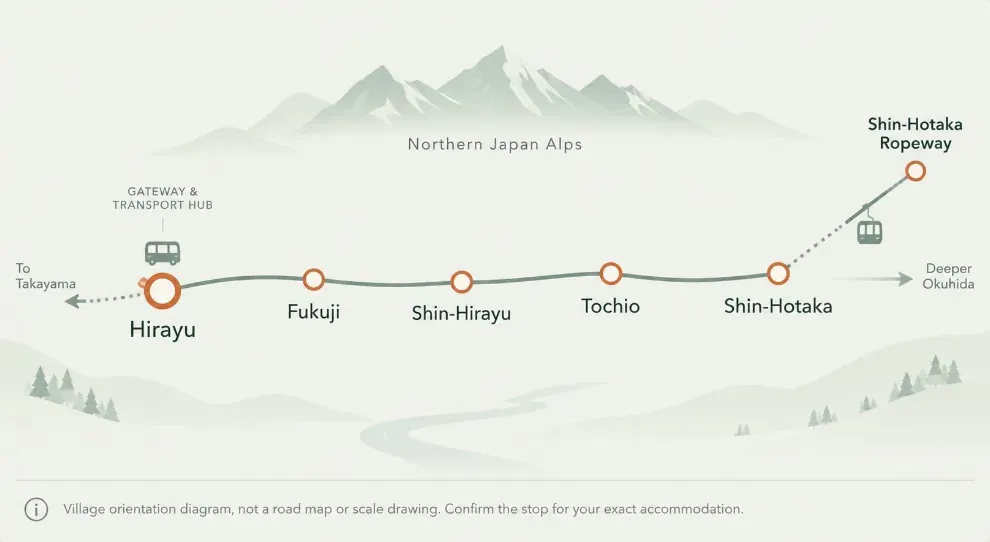
Choose by the property and the outings you actually want, then assess transport. Hirayu is useful for a terminal-centred plan; Shin-Hotaka may appeal for a mountain-inn stay; Tochio is worth investigating when its accommodation fits your priorities better.
Write the overnight stop into your wider itinerary before judging convenience. If you arrive from Takayama, have one night and return to the railway the next morning, simplicity may matter most. If you have several nights and want to explore the valley, a property that suits the party can outweigh a difference in the journey to one attraction.
Do not assume a map’s central-looking location means you can walk easily to everything. Valleys, roads and river crossings shape the practical route. A short distance between pins is not evidence of a sidewalk, a safe crossing or an easy walk with a suitcase. Use official route advice and ask the property about the journeys you will repeat.
For a comparison, look at the room plan, meal plan, bath arrangement, final arrival and departure together. A stay that wins on one feature but fails an essential need is not the better option. The right base is the one you can use comfortably, not the one with the most attractive label.
How do you get to Tochio Onsen by public transport?
Use the Nohi route information for Takayama, Hirayu and Shinhotaka, then confirm the accommodation’s recommended stop and final approach. Work from the actual address rather than assuming every property in Tochio uses an identical arrival route.
Select your date and read the bus timetable across one service column. Check the direction, stop pattern and operating notes, particularly if the day begins with a train connection in Takayama or an approach from Matsumoto. A travel planner can help identify possibilities, but the operator’s timetable should establish the service you intend to use.
Ask the accommodation what to do after getting off: which entrance, whether there are steps or slopes, and what the route is like after dark. If a transfer is available, confirm it with the date, bus and number of passengers. Do not interpret a pickup mentioned in an old review as a standing promise.
Our Takayama to Okuhida guide sets out the gateway connection. Leave an arrival margin if dinner is included. Nohi notes that snow, road conditions and traffic can delay services, so a plan requiring every stage to be exact is a weak fit for a time-sensitive meal.
Is Tochio Onsen a good way to find a simpler stay?
It is worth researching for that purpose, but compare the actual service and room plan rather than equating simple with interchangeable. A smaller inn can offer a good fit for one traveller and leave another missing an essential facility.
Look for the things that affect your day. Is there a bed or a futon? Is the toilet in the room? What bathing facility is available, and when can it be used? Are towels, evening meals and breakfast included in the selected plan? If the property expects self-service or has a different reception routine, understanding that before arrival helps you judge it fairly.
For meals, ask the accommodation what can be arranged rather than assuming a small property can adapt any menu. A home-style meal may still use stocks and ingredients prepared ahead of time. Explain allergies or exclusions clearly, and accept an honest limit from the kitchen. Do not turn a regional food description into a guarantee that your dietary requirement can be met.
If you are choosing Tochio to create room in the rest of your travel plan, keep the decision focused on the stay’s actual usefulness. Avoid booking a location that makes every excursion or meal more complicated merely because its headline room looks appealing. Compare like-for-like plans, including what you will need to arrange separately.
What is Kojin no Yu, and should you plan a visit?
Kojin no Yu is a named public outdoor bathing option associated with Tochio. Check the facility’s current operation and rules before planning around it, especially if an outdoor bath is the main reason you are considering the village.
The tourism association describes a riverside setting and practical entry information. That does not make it equivalent to the staffed bath area at your accommodation. Ask what washing and changing arrangements exist, what you need to bring and whether any restrictions affect your party. Keep the visit conditional until the current information is clear.
A river setting also deserves a different level of attention from an indoor facility. Follow local closures and warnings after rain, and do not enter a restricted area because a previous photograph shows someone bathing there. The official Shinpi Trail guidance highlights river and weather considerations on this part of the wider route. A public path or bathing place is not a guarantee of suitable conditions every day.
If you prefer a managed facility with staff available to answer questions, choose that deliberately. Enjoying Tochio does not require using every bath mentioned in a guide. Confirming one comfortable, appropriate option is more useful than collecting a list you cannot confidently use.
Can you explore Tochio on foot?
Choose a clearly identified local route and ask about its current condition before setting off. A village walk, a riverside route and a mountain trail require different preparation, even when they begin close together on a map.
The Shinpi Trail crosses the wider Okuhida landscape and provides section-specific information. Use that guidance to understand the actual route, including road walking and current restrictions. Do not follow a long-distance trail sign indefinitely because the first section feels easy. Decide the turnaround point, daylight requirement and return connection in advance.
For a mixed-age party, describe the intended walk concretely to the inn: how far everyone is comfortable walking, whether steps are a problem and whether you need a suitable place to stop. A recommendation described as short can mean something very different to people travelling with a preschooler or an older parent.
Keep riverbanks and wildlife separate from a casual village atmosphere. Follow posted instructions, avoid closed areas and do not approach animals for photographs. After rain or snow, ask again rather than assuming the previous day’s advice remains valid. If conditions are unsuitable, return to the planned bathing and room time instead of trying to salvage the walk by improvising a route beside traffic.
Can you visit Shinhotaka Ropeway from Tochio?
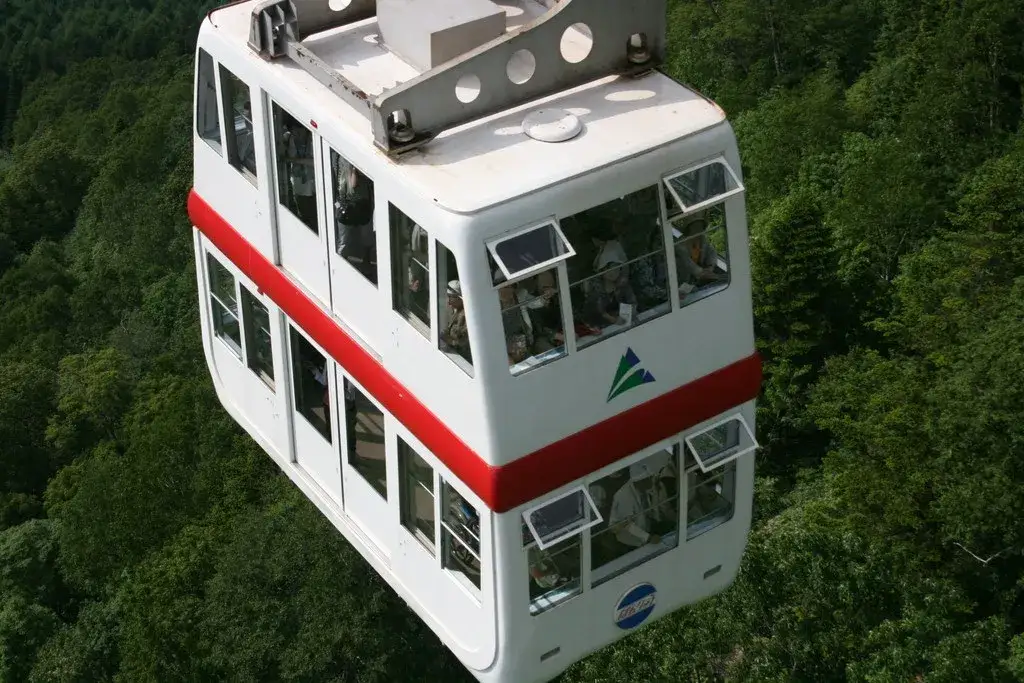
Plan it as a date-specific bus or driving outing, with the return journey and operating notices checked beforehand. The ropeway can be the main excursion of a Tochio stay without requiring another accommodation move.
For a bus plan, establish which stop serves your property and the service that continues towards the ropeway. Check the return before boarding the outward bus. Preserve the meal deadline with room for queues and delays, rather than making the last available return your preferred connection from the start.
The operator’s official website provides the current information to consult for operation and conditions. Wind, maintenance and visibility can change the day. A clear morning beside the river is not enough to establish what you will see at the upper station. Check the specific facilities or paths you plan to use as well as the gondola service.
Read the Shinhotaka Ropeway guide before fixing that day. Take clothing suitable for waiting outside and decide how much walking the party wants. If the ropeway is suspended, choose another appropriate activity or enjoy the inn; do not automatically replace a sightseeing ride with a mountain walk that needs different preparation.
Should you book Tochio with or without meals?
Choose after confirming what the property offers and what alternatives are genuinely practical for the evening. A room-only booking can be flexible, but it should not depend on finding an unverified restaurant after a late arrival.
If dinner is included, ask about the arrival deadline, seating and any dietary constraints before booking. Save the confirmation and tell the inn promptly if transport changes. A smaller kitchen may have a carefully timed routine, making advance communication especially useful. Do not assume that skipping dinner changes the room plan automatically; ask what can actually be booked.
For a room-only plan, identify the evening meal and its current operation before travel. Check the distance and the return route after dark, not just whether a restaurant appears on a map. If you are relying on bringing food, ask about storage, eating areas and any restrictions rather than assuming room facilities.
Breakfast is another practical decision. If leaving early for an excursion, confirm the service time and whether an alternative can be arranged. A meal you cannot use should not become a reason to rush or pressure staff for an unconfirmed arrangement. Match the booking to the day you intend to have.
What should you consider before a winter visit?
Make the arrival and departure conservative, and choose accommodation you will enjoy even if outdoor plans change. Winter adds practical questions about waiting, footwear and the last part of the journey, not just the possibility of a snowy photograph.
For a bus trip, check current route notices and keep a margin before a major rail or highway-bus departure. For the final walk, ask the property what to expect and whether a different entrance or pickup arrangement is advised. Nohi’s snow and road-condition warning applies to planning the whole connection, not only the published bus time.
For a rental car, discuss winter equipment and the route with the provider. Confirm parking and the approach with the accommodation separately. An open main road does not establish that every side road or parking area is straightforward. If driving in those conditions is outside your experience, choose a different transport plan rather than relying on luck.
Keep gloves, warm layers and essentials in a bag you can reach easily. Allow the group to move slowly with luggage and avoid planning an outdoor bath purely from a summer description. Every facility needs its own current check; conditions that support one part of the stay may not support another.
What does a sensible Tochio itinerary look like?
Use Tochio as a place to stay, then add one outing that earns its travel time. One night can suit a simple valley stop; a second night can give you a full day without moving bags.
On arrival, find the property, confirm meals and bathing, and decide whether a short local walk remains appropriate. For the full day, choose between the ropeway and another researched excursion according to current conditions. Avoid treating nearby village names as a list that must be completed. Each transfer consumes time you could otherwise spend enjoying the accommodation.
Before departure, check the service, final route to the stop and checkout arrangements. Leave room for breakfast if booked. A successful Tochio stay should feel like a deliberate choice that suits your party, with clear expectations and a workable route, rather than a room selected from a regional search without attention to the place around it.
Tochio Onsen Ryokan FAQs
Is Tochio Onsen part of Okuhida Onsen-go?
Yes. Tochio is one of the five hot-spring areas in the Okuhida region of Takayama City, Gifu Prefecture. Check the exact accommodation address because a regional Okuhida listing may refer to another village. The property’s recommended bus stop is more useful for arrival than the broad regional name.
Is Tochio always the cheapest Okuhida village?
Do not assume a fixed village-wide ranking. Availability, room category, meals and bathing arrangements vary by property and date. Compare the plans that actually meet your needs, including anything you would arrange separately. A description of simpler inns does not establish a current booking result for your party.
Can I stay in Tochio without a car?
It can work when the Nohi route and the property’s final approach suit your plans. Confirm the exact stop and walking route, then check the service for your date and arrival deadline. If a pickup is part of the arrangement, agree it directly instead of assuming it from an old review.
Is Kojin no Yu the same as a hotel bath?
It is a named public bathing option, so check its own entry rules, operation, washing arrangements and conditions. Do not assume it offers the same services or routine as a staffed bathing area inside a hotel. If any requirement is important to your party, verify it before making the visit central to your plans.
Can I walk along the river in Tochio?
Choose a specifically identified route and consult current local guidance. A river beside a village is not automatically an appropriate path, particularly after rain or snow. Ask the accommodation about your intended walk and follow restrictions. For a Shinpi Trail section, check the trail organisation’s notices and route information as well.
Should I book meals at my Tochio accommodation?
Choose after checking the available plan and a practical alternative. If you book room-only, confirm an evening meal arrangement before arriving rather than relying on an unverified map listing. If meals are included, check arrival deadlines and dietary needs in advance so the plan fits both your journey and the kitchen’s routine.