Gifu, Japan · The Northern Alps
Hirayu Onsen guide 2026
Hirayu Onsen is a useful Okuhida base for a ryokan stay combined with Kamikochi or the Shinhotaka route. Choose it for a terminal-centred arrival, then compare the exact room, bath and meal plan. Confirm seasonal buses and property rules before fixing excursions around your overnight stay.
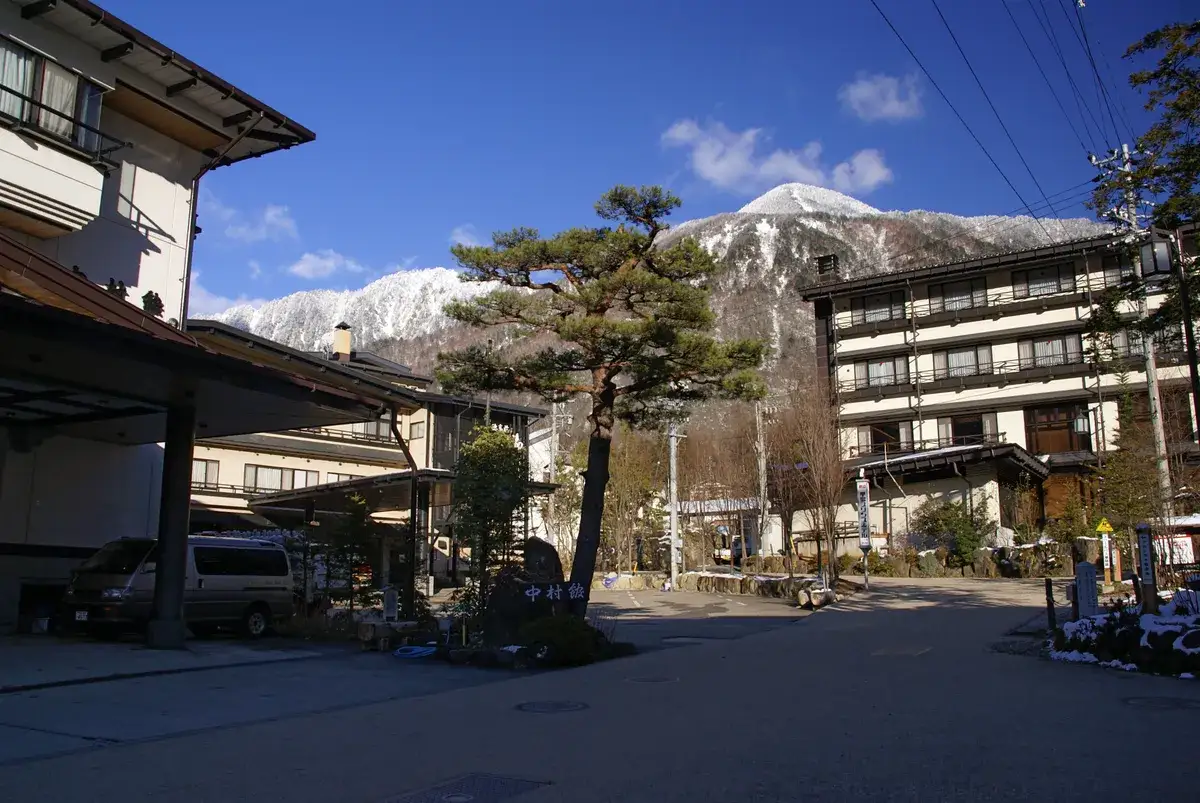
Archive view of Hirayu Onsen beneath snow-covered mountains; buildings and streets may have changed. · 663highland · CC BY 2.5 · Wikimedia Commons · Resized and converted to WebP
Some booking links may earn us a commission at no extra cost to you. How we fund this guide.
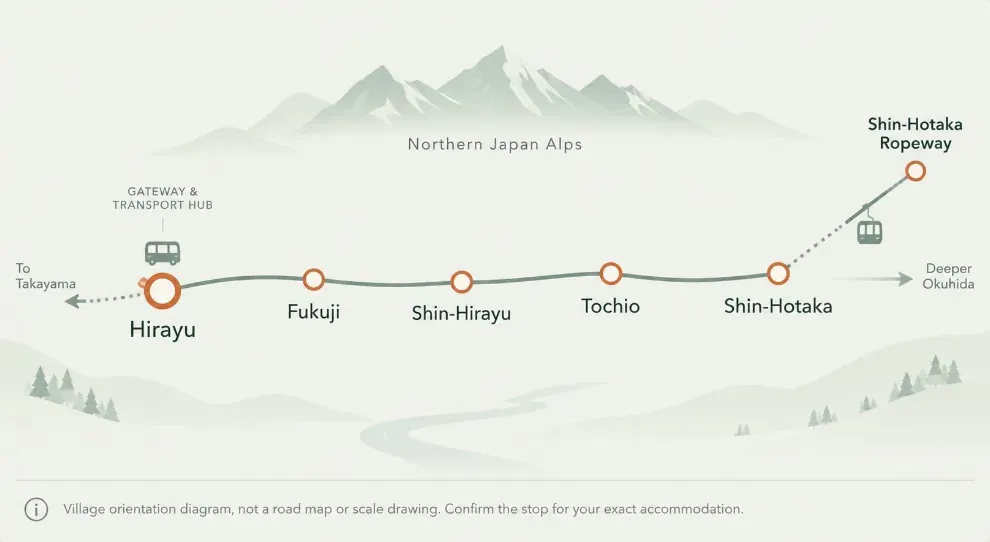
Why choose Hirayu Onsen for an Okuhida stay?
Choose Hirayu when a straightforward arrival and a useful transfer point matter more than retreating to the furthest part of the valley. It is a particularly sensible first Okuhida base for a trip combining a ryokan night with Kamikochi, because you can organise those two experiences around the same transport hub.
Hirayu belongs to the five-village Okuhida Onsen-go region in Takayama City, Gifu Prefecture. Its name sometimes appears on a bus destination screen, a bathing facility, and a hotel description in the same search session. Those results describe different things. The village is the base; Hirayu no Mori is a named bathing and accommodation business; an individual ryokan has its own arrival instructions and facilities. Establish which one you mean before comparing rooms.
For a first visit, start with the holiday you want inside the inn. Someone who wants to arrive, bathe, eat dinner and sleep has different priorities from someone leaving before breakfast for a mountain outing. Hirayu works best when the transport plan and the room plan support each other. Our Okuhida Onsen-go overview explains how that choice compares with the other four villages.
How do you get to Hirayu Onsen without a car?
Use the official Nohi Bus information to plan the journey to Hirayu Onsen Bus Terminal, then follow your accommodation’s directions for the last part. Takayama is the main approach for many western itineraries; Matsumoto is another gateway to consider when crossing the Japan Alps.
Nohi lists Hirayu on its Takayama–Shinhotaka route. That makes a Takayama train arrival and a local bus journey a coherent combination, rather than a reason to hire a vehicle automatically. Read the timetable across a single service column and check any operating-period notes before relying on a departure. A route line on a tourism map does not establish how often a bus runs on your date.
Take a screenshot of the accommodation name in Japanese, its address and its recommended stop. Ask whether the route from the terminal involves a slope, steps or a road crossing. These details become more useful when carrying a suitcase or travelling with a parent whose comfortable walking distance is short. Do not assume that a property described as being in Hirayu is equally convenient for every arrival.
Keep your ryokan dinner deadline beside the bus plan. If your train reaches Takayama late in the day, select a bus connection that the property confirms will still allow check-in and the booked meal. Our Takayama to Okuhida transport guide sets out the route-planning process without copying a timetable that may change.
Is Hirayu the best base for Kamikochi?
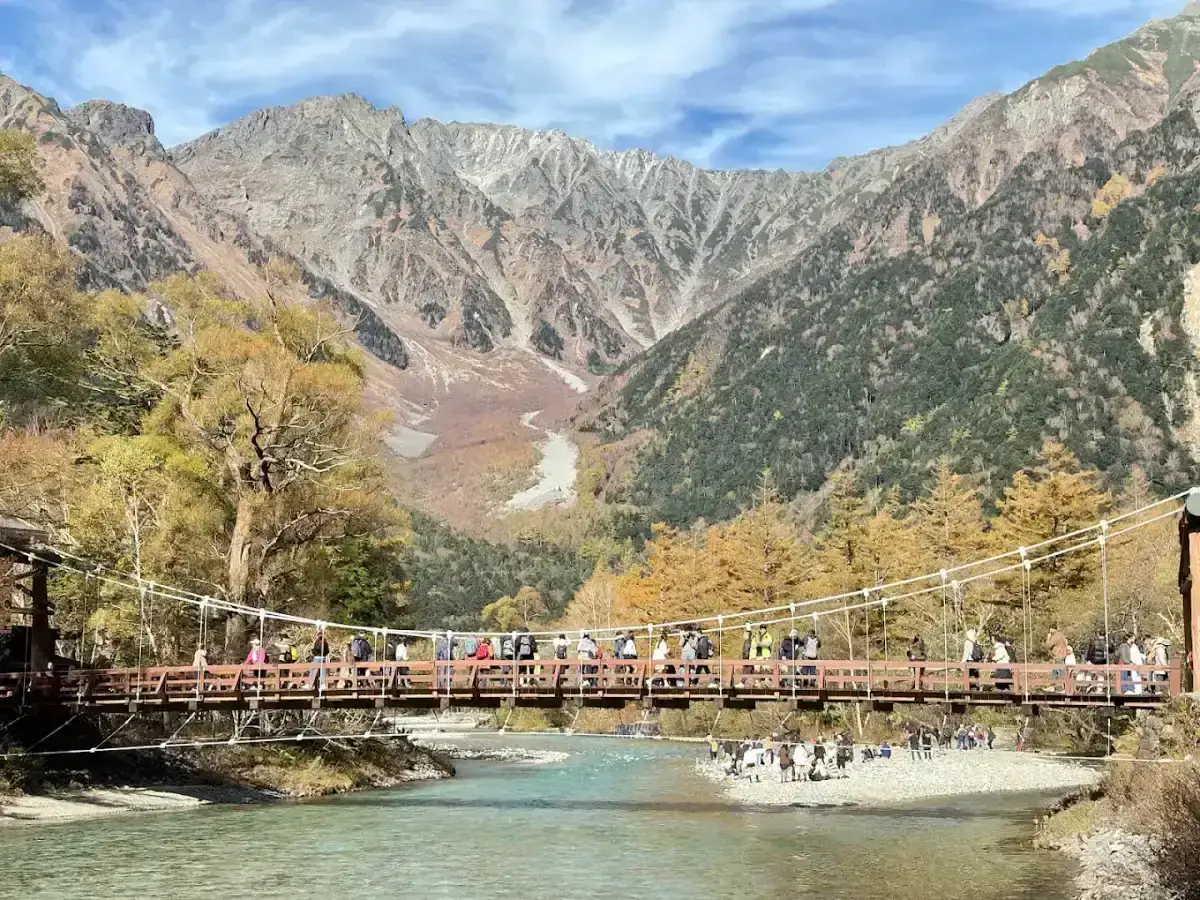
Hirayu is a practical base for a Kamikochi visit when the seasonal bus connection is operating and you prefer sleeping in an onsen village. Staying inside Kamikochi is the alternative to compare if early valley walks are the main purpose of your trip.
The important distinction is between the place you sleep and the place you explore. An inn in Hirayu is outside Kamikochi, even when a booking page promotes it as a Kamikochi base. You still need to make the outward and return journey. Look up the service for your travel date, then decide how much walking time remains after transfers and a comfortable return margin.
Private cars cannot simply be driven into Kamikochi. Drivers approaching from the Takayama side must follow the official parking-and-transfer arrangements rather than aim their navigation system at Kappa Bridge. Confirm the current arrangements and seasonal access notices before leaving the inn.
If you are staying just one night, put the inn dinner and the Kamikochi outing on different sides of the night where possible. Arrive in Hirayu with time to enjoy the stay, then visit the valley after checking out or luggage arrangements. With two nights, a return-to-the-same-room plan can be more comfortable. The Kamikochi from Okuhida guide covers that decision in more detail.
Which Hirayu accommodation should you shortlist?
Shortlist properties by their exact room and meal plan, then compare their location against the terminal. A familiar hotel name is a starting point for research rather than proof that every room includes the bath or dining arrangement shown in its photographs.
Hirayu no Mori is useful to investigate when bathing is central to the visit, because its official website distinguishes hot springs, dining and accommodation. Check whether you are considering an overnight booking or day-use bathing; they are separate decisions with different conditions. Do not assume a day-use facility’s headline amenities establish the details of a room reservation.
Miyama Ouan, Mozumo and Hirayukan are names you may encounter while searching Hirayu stays. Treat each room category as a separate product. For a bath attached to the room, check the water source, whether it is indoors or open to the air, privacy screening and whether your category includes it. For a shared private-use bath, check the reservation process and any restrictions. A private bathroom on a booking filter does not answer these questions.
Use the Hirayu ryokan comparison to organise the shortlist, then return to the official property description before booking. For groups, write down the actual number of beds or futons, who will share a room and whether everyone can use the sleeping arrangement comfortably. An attractive room photograph cannot tell you how it will feel once the luggage is open.
What can you do in Hirayu between arrival and dinner?
Keep the first afternoon simple: find the inn, settle your bags, explore the village at an easy pace and leave time for bathing. The point of booking a ryokan is partly to enjoy the accommodation rather than spend every available hour on another bus.
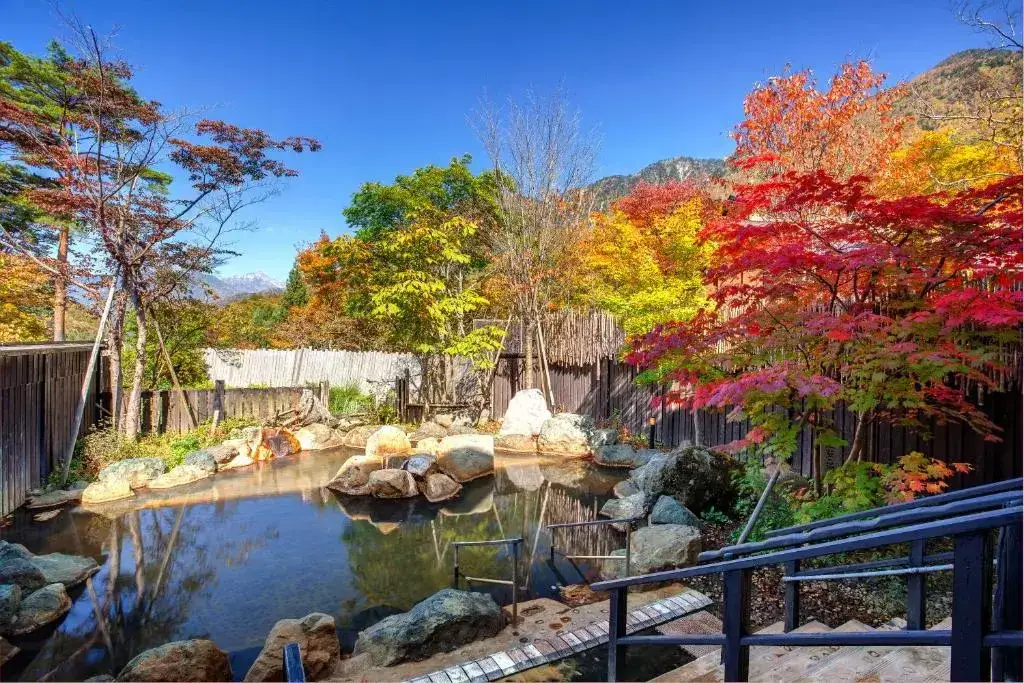
The tourism association lists Hirayu no Yu and Hirayu no Mori among local bathing options. Choose one after checking its current entry information and rules. A smaller public bathing place and a larger managed facility offer different experiences; neither should be treated as an interchangeable tick on a sightseeing list. Ask about towels, washing facilities, changing areas and whether any part is temporarily closed.
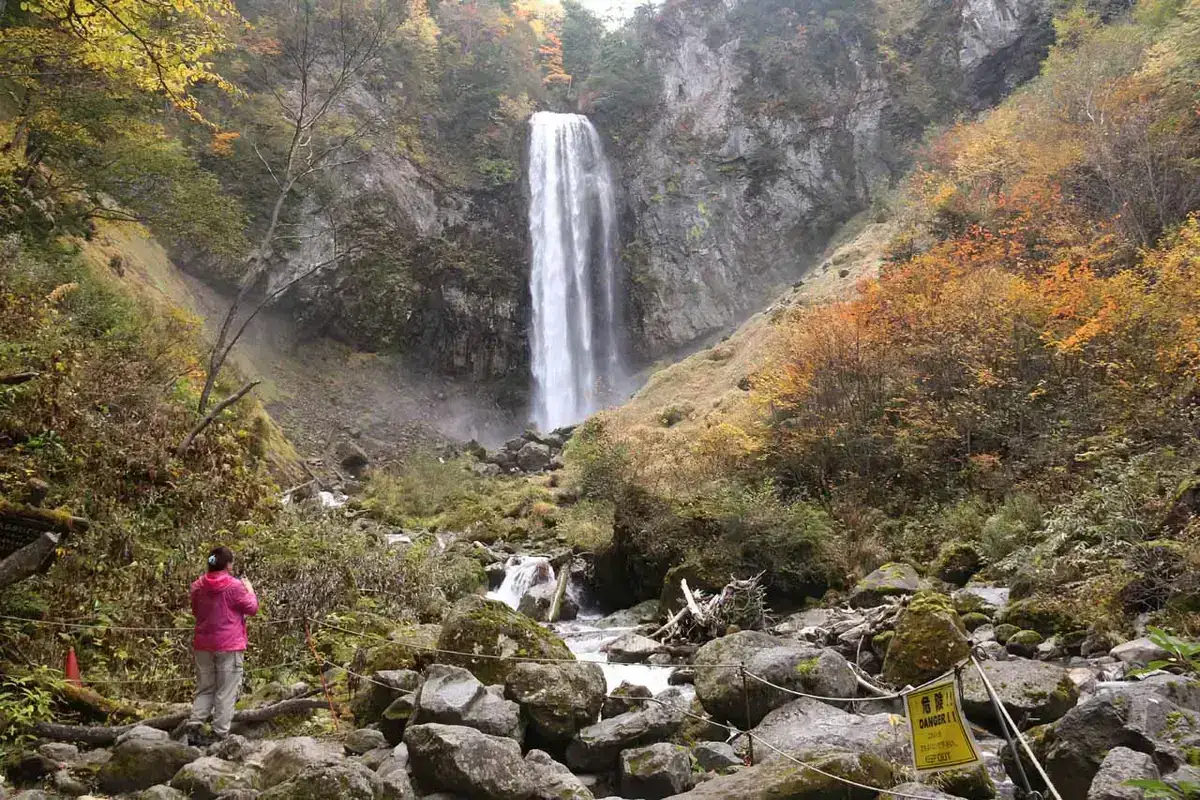
Hirayu Great Falls is another named local attraction, but the approach should be assessed separately from a stroll around the terminal. Confirm the current route, conditions and daylight before deciding whether it belongs on your arrival day. Snow and ice can change a seemingly short excursion, and a photograph taken in another season is not route guidance.
If arrival is delayed, remove the excursion first. Tell the property where you are, ask whether the planned meal is still possible and follow its advice. Trying to preserve a waterfall visit after losing a connection usually sacrifices the part of the stay you already booked.
Can you visit Shinhotaka Ropeway from Hirayu?
You can build a ropeway outing around the Nohi route from Hirayu, provided the service and the ropeway are operating for your date. Treat the return bus and the last descent as separate constraints and plan around the earlier practical deadline.
Do not add Kamikochi automatically to the same day. Both outings require attention to transport and conditions, and combining them can turn a scenic trip into a sequence of connections. A more comfortable two-night plan gives each one a main outing slot and leaves room for a changed forecast. Your preference might be different if seeing the ropeway is a brief stop on a longer transfer day, but that is a conscious trade-off.
The ropeway’s official website gives operating notices and weather-related information. Check it before boarding the outward bus rather than assuming clear weather in Hirayu guarantees views or operation at the upper station. Also check notices for the station facilities or paths you intended to use. An operating gondola does not mean every surrounding walk is available.
Bring the clothing needed for waiting outdoors as well as for riding. A sightseeing outfit chosen for lunch in Takayama may be uncomfortable at an exposed viewpoint. If views are hidden or service is suspended, returning to Hirayu for a slower bathing day is a legitimate alternative, not a failed itinerary.
What should you check about bathing, tattoos and meals?
Ask the property directly about the rules that affect your party before completing a booking. Bath access, tattoos and dietary arrangements are property-specific matters; a general description of Hirayu cannot approve them on the inn’s behalf.
For tattoos, state whether you want the communal bath, a reservable private bath or a room bath. Ask for written confirmation that covers the people and facilities involved. A private-use booking does not necessarily imply a property-wide exception. If the answer is unclear, do not turn a hopeful interpretation into the main reason for choosing that inn.
For meals, specify allergies and the ingredients you need to avoid, including stocks, sauces and cooking alcohol where relevant. Vegetarian, seafood-free and halal are different requests. An inn that can omit a visible ingredient may not be able to alter a prepared stock or guarantee a separate preparation process. No village-wide suitability claim can replace that conversation.
Bathing is also a matter of comfort and routine. Check whether children may use the facilities you want, whether the party can bathe together, and how private-use sessions are arranged. Follow the facility’s posted instructions, wash before entering where required, keep towels out of the bathing water and respect restrictions on photography. When unsure, ask the staff before entering rather than trying to learn from another guest’s behaviour.
How should you plan Hirayu in winter?
Plan winter around a confirmed arrival, a warm place to spend the afternoon and a flexible outdoor programme. A short village stay can work well without requiring every seasonal excursion to be available.
Nohi warns that snow and road conditions can delay the Shinhotaka route. Do not make the final bus your only way to reach a time-sensitive dinner, and avoid a tight long-distance onward connection immediately after leaving Okuhida. If a connection matters, protect it with more time or an overnight gateway stay.
Before driving, ask the rental company about the vehicle’s winter equipment and the actual route you plan to use. Ask the inn about its approach road, parking and the walk from the car to reception. Those questions remain relevant even when the main road is open. If you are uncomfortable with winter mountain driving, select a transport-based itinerary instead of treating a car as the default solution.
Pack footwear with a practical tread, gloves and a layer that remains useful while waiting for a bus. Leave enough room in the schedule to move slowly with luggage. Do not promise children a particular snow activity or festival until the operator confirms it for your dates. A winter photograph is a scene from a particular day, not a guarantee of snow depth or access.
Is one night enough, or should you stay longer?
One night can give you a satisfying introduction if the inn is the main event. Choose two nights when you want a full excursion day, a less rushed arrival or room to move plans around the weather.
For one night, aim to arrive with a clear afternoon, enjoy the room and dinner, then make the following morning’s plan around breakfast and luggage. For two nights, ask whether the property can provide suitable meals on both evenings and whether any daytime housekeeping arrangements affect access to your room. If your group wants different activities, the terminal-centred base may make it easier to reunite without relocating everybody.
The final booking should answer five questions in one place: which room, which baths, which meals, which stop and which arrival deadline. Save those confirmations with the reservation. Then check transport and operating notices again closer to departure. That small amount of organisation lets Hirayu function as a welcoming onsen stop rather than an uncertain gap between Takayama and the mountains.
Hirayu Onsen Ryokan FAQs
Is Hirayu Onsen the same as Okuhida Onsen-go?
Hirayu is one of the five hot-spring areas that make up Okuhida Onsen-go. A hotel described as being in Okuhida could therefore be in Hirayu or in another village. Check the actual address and the recommended bus stop before deciding that two properties offer the same access for your plans.
Should I stay in Hirayu or Takayama?
Choose Hirayu when the ryokan stay and access towards Kamikochi are the focus. Choose Takayama when town sightseeing, rail connections and a wider evening programme matter more. You can combine the two bases, but allow a proper arrival window for any booked ryokan dinner rather than treating the transfer as an afterthought.
Can I visit Hirayu without staying overnight?
A day visit can include a village walk and a bathing facility if it accepts day visitors on your date. Confirm entry arrangements directly, including towels, bathing rules and current opening information. Overnight accommodation offers a different experience, with room time and potentially meals, so compare those options by what you want to do.
Does every Hirayu ryokan have a private onsen?
No private-bath arrangement should be assumed from the village name or a general hotel photograph. Check the exact room category and distinguish a bathroom, an attached hot-spring bath and a shared bath reserved for private use. Confirm the booking process and the current conditions with the property before making the reservation.
Can I walk from Hirayu to Fukuchi?
Do not assume the road between the villages is a casual walking connection. The official Shinpi Trail guidance recommends the bus for the section between Fukuchi Onsen Bus Stop and Hirayu Bus Terminal because there are no sidewalks and traffic is heavy. Check current route notices and use the appropriate transport connection.
Can I leave luggage while visiting Kamikochi?
Ask your inn or the relevant terminal service what storage is actually available for your date, bag size and collection time. Do not assume a hotel can store luggage all day after checkout or that a locker will be free. Make the return and collection plan before setting off for the valley.