Gifu, Japan · The Northern Alps
Shin-Hirayu Onsen guide 2026
Shin-Hirayu Onsen is a useful Okuhida option when a particular hotel or ryokan fits your room, bath and meal needs. Check its exact bus stop and arrival arrangements, then build excursions around the stay. It is a separate area from Hirayu, so keep the full name in your travel notes.
Some booking links may earn us a commission at no extra cost to you. How we fund this guide.
Who should choose Shin-Hirayu Onsen?
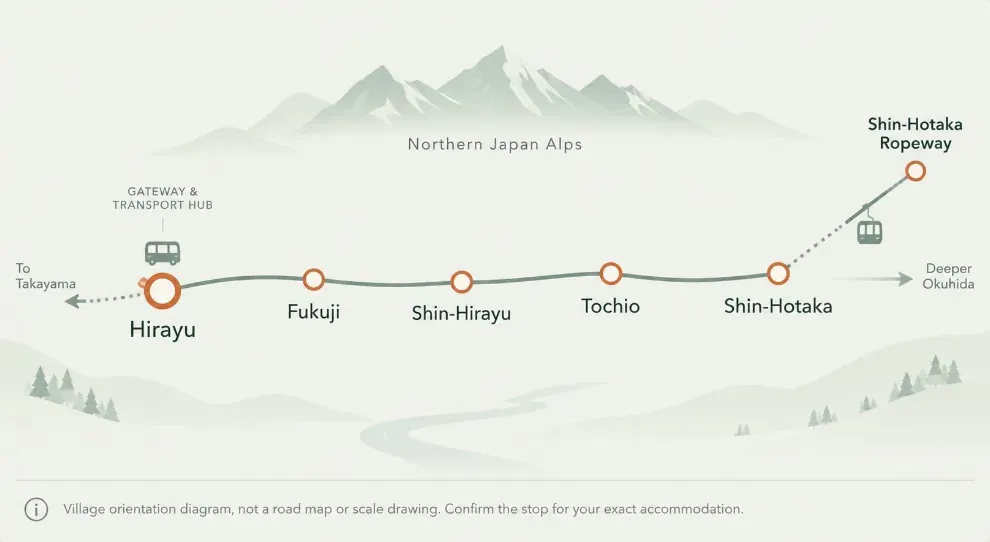
Choose Shin-Hirayu when a particular accommodation fits your party and you want an Okuhida base on the valley route. It makes sense as a property-led decision rather than a village selected only because its name appears between Hirayu and Shin-Hotaka on a map.
Shin-Hirayu is one of the five hot-spring areas making up Okuhida Onsen-go. It is a different area from Hirayu, so the word Shin is not a detail to ignore when saving bus directions. Check the full property name, address and stop every time you move between a booking page and transport information. A search result shortened to Hirayu can otherwise send you towards the wrong arrival plan.
The tourism association describes a range of accommodation in Shin-Hirayu, from smaller guesthouses to larger hotels and Japanese-style inns. That variety is the useful starting point: compare the actual building, room and meal setup instead of assuming every stay offers the same traditional experience. A larger property may suit one group while another prefers a smaller inn.
The Okuhida Onsen-go guide puts Shin-Hirayu beside the other villages. Use it to decide whether the wider location suits your route, then let the specific accommodation determine the shortlist.
How is Shin-Hirayu different from Hirayu Onsen?
They are separate Okuhida areas, and your choice should follow the inn and the day’s connections. Hirayu is particularly useful for a plan centred on its terminal; Shin-Hirayu may be preferable when the property you want is further along the valley.
Think about the two decisions separately. First choose the transport pattern: where you arrive from, which excursion matters and where you go next. Then compare rooms and bathing. A slightly more involved arrival may be worthwhile for the right accommodation, while an easy terminal connection may matter more if the group is carrying large bags or leaving early.
For a one-night stop, be strict about what fits. An arrival from a distant city, a long sightseeing outing and a full ryokan evening compete for the same time. If Shin-Hirayu is the inn you most want, remove an optional attraction rather than trying to preserve everything. If the main purpose is a Kamikochi connection, compare the simpler terminal-based alternative before paying for a room feature you barely have time to use.
Read the Hirayu Onsen planning guide as a practical comparison. Neither village label tells you whether a room has beds, a suitable bath or a meal plan your party can use; those remain property-level questions.
How do you arrive in Shin-Hirayu by bus?
Use the official Nohi route information and ask the accommodation for its recommended stop. Work from that stop back to Takayama or Hirayu, then check the selected service for your travel date and direction.
Nohi includes Shin-Hirayu on its Hirayu–Shinhotaka corridor. Read the timetable across one column so that you do not accidentally join an arrival from one bus to a departure from another. Check seasonal notes and route variations. A highlighted route line on a tourism leaflet is useful for orientation but not enough to confirm the service you intend to board.
Ask how to make the final part of the journey: which side of the road, which entrance, how much uphill walking and whether any transfer can be arranged. If you need a pickup, agree the service and party size explicitly. Keep a way to notify the inn if the bus is delayed, along with the Japanese name of the stop and property.
The Takayama to Okuhida guide explains the gateway journey. Give it enough space in the day to protect the accommodation’s dinner deadline. Nohi’s warnings about road-related delays are a reason to avoid a fragile arrival plan rather than a reason to assume a published connection will always fail.
What should you compare before booking a Shin-Hirayu hotel?
Compare the room, bath, meals and access as one stay. A hotel with an appealing bathing photograph may still be the wrong choice if the sleeping arrangement or route through the building does not suit your party.
Start by listing what you cannot compromise on. This might be a bed, an attached bath, a dietary arrangement or avoiding stairs. Send those requirements to the property before booking, with the exact room category you are considering. A general reply about the hotel is less useful than an answer that confirms the category actually offered for your dates.
The tourism directory includes named Shin-Hirayu accommodation such as Okuhida Garden Hotel Yakedake and smaller inns. Use those listings to find the official information, not to assign identical facilities to every candidate. Avoid making an accommodation’s historical description into a promise about the current booking plan.
Ask where meals are served and whether the party can sit together. Check the distance and steps between the room, bath and dining area. For a traveller with limited mobility, these repeated journeys may matter more than the walk from the bus stop. For a family, the practical questions include sleeping places, child entry rules and whether the evening meal matches the child’s routine.

Can you find a private onsen in Shin-Hirayu?
Investigate the exact property and room plan rather than relying on a village-wide promise. Private use can refer to an attached room bath or a shared bath reserved for your party, and those arrangements feel different during a stay.
For a room bath, ask whether it uses hot-spring water, how it is enclosed and whether there are steps between the room and the bathing area. An outdoor setting can be part of the appeal, but make sure it provides the level of privacy and physical comfort you want. Do not assume a private bathroom filter establishes any of those details.
For a reservable facility, ask when bookings are made and whether access is guaranteed or subject to available sessions. Check the length and conditions of use, any restrictions on who may bathe together and whether it is included in your plan. The absence of a separate bath in the room photograph does not tell you the quality of a shared private-use option; the booking rules are what make it useful.
Use our private-onsen guide as a list of questions to put to the inn. Tattoos, children and dietary requirements still need separate confirmation even when a private bath is available. A favourable answer to one requirement should not be stretched into approval for another.
What can you do locally without turning the stay into a tour?
Ask the inn for an appropriate village walk and choose one nearby interest rather than building a full day of small stops. The most useful local outing is one you can enjoy without hurrying back for a meal or taking a route unsuited to the conditions.
Shin-Hirayu has historical associations and local sights described by the tourism association, but opening and visiting arrangements need checking individually. A temple, local monument and outdoor viewpoint do not necessarily share an access calendar or offer the same visitor facilities. Use the official sightseeing directory to identify the exact place, then confirm what a visit involves.
If a walk follows the Shinpi Trail, check the trail organisation’s current guidance and restrictions. Do not assume an itinerary labelled a trail is entirely off-road or suitable for every member of a family. Road sections, weather and river conditions can change what is sensible. Carry the map relevant to the selected section instead of simply following signs beyond the point you planned to turn around.
For someone who does not want a walk, room time and bathing are a reasonable programme. Agree this before booking so that resting at the accommodation feels like the intended holiday rather than a compromise imposed after arrival.
Is Shin-Hirayu convenient for Shinhotaka Ropeway?
It can work for a bus-based ropeway outing when your selected services and the ropeway operation align. Confirm the round trip and the inn’s meal times before treating it as a fixed day plan.
Look up the stop nearest the accommodation and the service continuing towards the ropeway. For the return, choose a connection that protects dinner with a margin for queuing and delays. Keep the ropeway descent and the bus departure as two different deadlines. Reaching the lower station before closing does not guarantee you have reached the right bus in time.
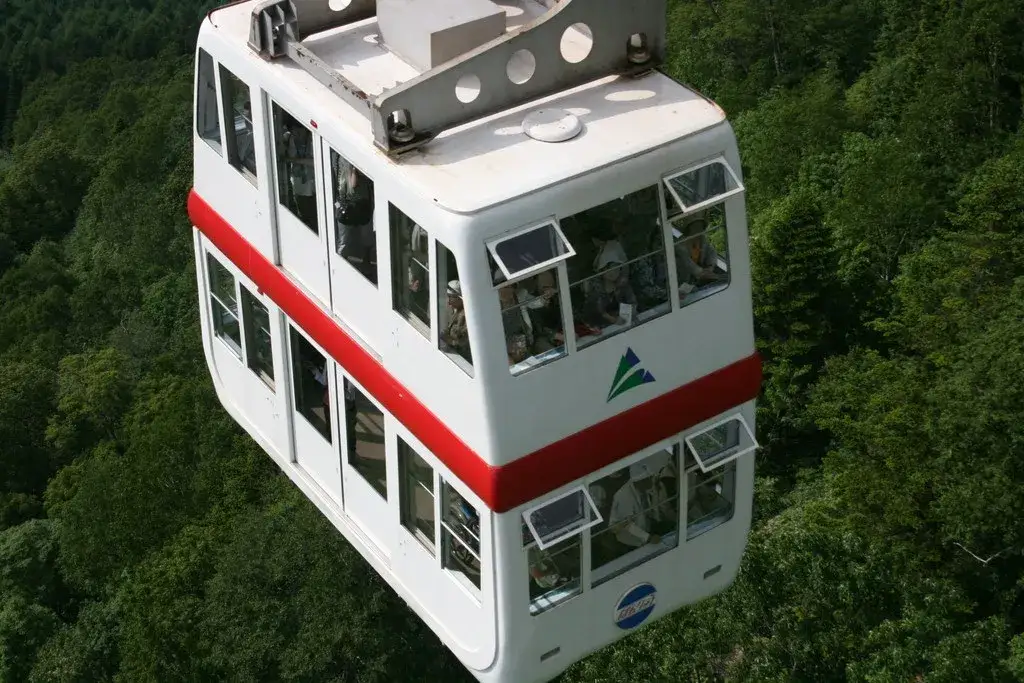
The operator’s website is the place to check wind-related suspensions, maintenance and the facilities you want to use. Visibility can differ from the lower valley, so decide how much the view matters to you before setting off. If the purpose is an outdoor mountain walk rather than sightseeing at the station, assess that route separately.
The Shinhotaka Ropeway guide helps organise that outing. Leave a spare slot if it is central to the trip, and have a simple alternative for poor conditions. An accommodation you genuinely want to spend time in makes weather flexibility much easier.
How should a family or mixed-age group choose a room?
Choose the room around how the group sleeps, bathes and eats rather than a headline capacity. A room that accepts a certain number of guests is not automatically comfortable for their ages, luggage and physical needs.
Check the actual sleeping places for every person. Ask about beds versus futons, the space available when bedding is laid out and the route to the toilet at night. If people need different sleep times, consider whether one large room is genuinely the best arrangement. A connecting or adjacent room request also needs confirmation; it should not be assumed from rooms booked together.
For bathing, ask whether young children can use the chosen facilities and whether a private-use arrangement covers the whole group. Do not plan around persuading a reluctant person to enter a communal bath. For an older traveller, ask about steps, handrails and the physical route in concrete terms instead of relying on a broad accessibility label.
Meals need equal attention. Explain allergies, food exclusions and preferred seating before choosing the plan. Ask about the children’s menu and dinner timing. A beautifully presented adult meal may not solve the needs of a tired child, and the kitchen may not be able to improvise a different dinner at short notice.
What changes for a winter Shin-Hirayu stay?
Winter increases the value of a reliable arrival plan, appropriate clothing and a room you are happy to enjoy when outdoor plans change. Treat scenic snow photographs as examples of a season, not a guarantee for your booking date.
Check the bus operator’s current notices and the property’s final approach. If walking with luggage, ask about the condition of the path and the most practical entrance. Give a long-distance onward connection more space on departure day, because road delays can affect the first stage of the journey.
For drivers, discuss winter equipment and the planned route with the rental company. Confirm the inn’s parking location and whether the last approach differs from the main road. If your experience is limited, a car-free plan may be more comfortable than hoping conditions will remain easy. Do not interpret the ability to rent a vehicle as confirmation that every intended road is open.
Pack gloves, practical footwear and clothing for waiting outside rather than only moving between heated spaces. Keep the day’s essentials accessible without opening a large case on arrival. If a seasonal activity is important, verify its actual operation and booking conditions before making it the reason for the stay.
How do you build a balanced Shin-Hirayu itinerary?
Give the property a full afternoon and evening, then add one excursion that matches your priorities. A second night is useful when it reduces rushed transfers or creates weather flexibility; it is less useful if you fill it with another sequence of distant stops.
Before arrival, confirm room, meals, bathing and transport in one note. On the first evening, check the next day’s conditions and ask the inn about local changes. Choose the outing that remains practical rather than insisting on the original order. If the group splits, agree a meeting point and time that do not depend on everyone having mobile reception.
For departure, plan backwards from the service you need, including checkout and the final walk or transfer. Resist fitting another attraction into a small gap simply because it is shown nearby on the map. Leaving calmly after breakfast often preserves more of the value of the stay than adding a hurried photograph before the bus.
Shin-Hirayu Onsen Ryokan FAQs
Is Shin-Hirayu Onsen the same as Hirayu Onsen?
They are separate hot-spring areas within Okuhida Onsen-go. Keep the full place name when checking an accommodation address or bus stop. A shortened search result can be confusing, so use the property’s own arrival instructions and confirm the recommended stop before you travel with luggage.
Is Shin-Hirayu suitable without a rental car?
It can be, provided your accommodation and the Nohi service connect in a practical way. Ask the inn for the exact stop, final walking route and any agreed transfer. Then check the timetable for your dates and dinner deadline. A village being on a bus corridor does not establish every property’s convenience.
Does Shin-Hirayu offer traditional inns as well as hotels?
The tourism association describes different accommodation types in the area. Compare the individual properties and exact room plans rather than assuming a village label establishes the experience. Sleeping arrangement, meal inclusion, bathing privacy and stairs are more useful comparison points than the general distinction between a hotel and an inn.
Can I use a private bath if I have tattoos?
Ask the property directly about tattoos and the exact bath you intend to use. Private bathing and tattoo permission are separate questions, and a policy may differ between facilities. Save written confirmation that covers your party and room plan rather than relying on another guest’s account or an unclear booking filter.
Should I book one night or two in Shin-Hirayu?
One night can suit an accommodation-led stop with an unhurried arrival. Two nights can support a full excursion day and a second evening at the inn. Decide using your transport plan and the time you want in the room, not a general assumption that every village requires the same stay length.
Can Shin-Hirayu be a base for both the ropeway and Kamikochi?
It may fit a longer itinerary if the date-specific connections work, but treat them as separate outings. Check the seasonal Kamikochi services and the journey through Hirayu, then plan the ropeway around its operation and weather. Avoid making both excursions compete with the same ryokan dinner deadline.