Gifu, Japan · The Northern Alps
Hirayu Waterfall: Access, Walking and Winter Visits
Hirayu Great Falls is a worthwhile addition to a Hirayu stay when the approach is open and conditions suit walking. It is a separate outing from the bus terminal, not a viewpoint you see while changing buses. Check local access advice before setting out, especially in snow or ice.
Some booking links may earn us a commission at no extra cost to you. How we fund this guide.
Which waterfall plan should you choose?
Choose a local outing with a confirmed return, and keep winter visits conditional on current access advice.
| Plan | Best fit | Main caution |
|---|---|---|
| Hirayu overnight plus optional walk | A relaxed arrival afternoon | Settle bags and dinner timing first |
| Dedicated nature outing | Travellers interested in the waterfall setting | Confirm the whole pedestrian approach |
| Winter visit | A prepared group using open routes | Ice photographs do not establish safe access |
| Visit between buses | A generous transfer interval | Include the return walk and luggage collection |
What is Hirayu Great Falls?
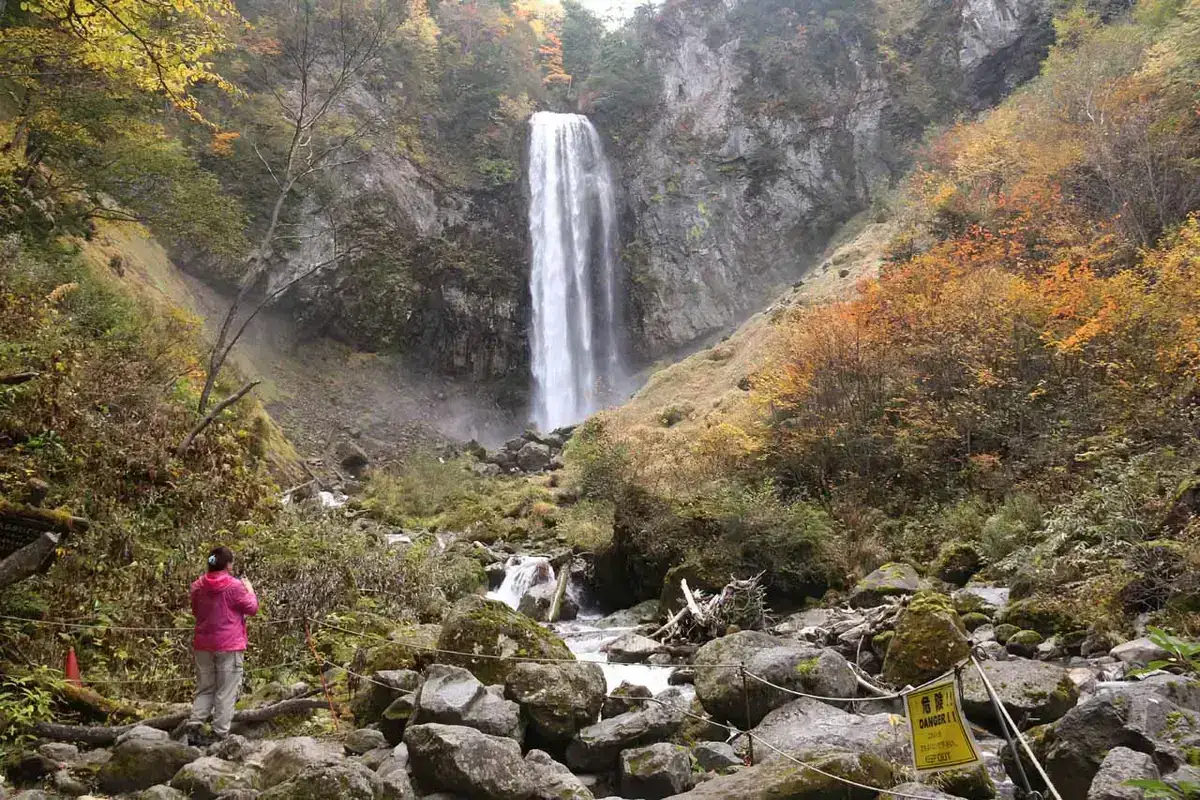
Hirayu Otaki is a waterfall in the Hirayu area, with a high drop against a rocky mountainside. Its attraction is the combination of water, forest and changing seasonal scenery. A visit works well when you want a natural sight without committing to a full mountain excursion.
Keep the outing separate from a bathing reservation or a tight bus transfer. The time you need includes getting to the approach, walking, taking photographs and returning—not merely looking at the falls.
How should you plan access from the village?
Ask your accommodation or local visitor staff about the current pedestrian approach and vehicle access. Establish where the walk actually begins, where vehicles can stop, and whether the return route is the same. A bus stop with “waterfall” in its name does not necessarily deliver you to the viewpoint.
If you have luggage, leave it in a confirmed storage location first. Bring footwear that can cope with wet or uneven surfaces. Do not make a roadside walk because an app offers it as the shortest line.
When is the best time to visit?
Choose the season for the experience you want, but let current conditions decide the visit. Leaf colour is variable, summer weather can change quickly, and a winter image does not establish that the approach is currently safe or accessible.
A frozen waterfall event is a separate planning question from an ordinary daylight visit. Check the tourism association’s announcement for dates, access arrangements and any restrictions. Never use a previous winter’s programme as confirmation for your trip.
Who should reconsider the walk?
Travellers who need a reliably step-free outing should get specific access information before going. Wet ground, snow and ice can change the difficulty of a short approach. Families should judge the actual surface and barriers rather than assuming a named tourist attraction has the same access standard as an urban park.
Stay behind barriers and keep to the permitted viewpoint. If the approach is closed, use the extra time for Hirayu village or a suitable bath instead. A good alternative is more useful than forcing the itinerary to match a photograph.
Why is Hirayu Otaki worth visiting?
Hirayu Otaki offers a forest-and-waterfall outing close to the Hirayu part of an Okuhida trip. It is a good choice when you want one focused natural sight rather than another day of mountain transport. The waterfall is also known as Hirayu Great Falls, so use both names when checking local directions.
The Japan Tourism Agency’s interpretation describes the falls’ volcanic setting and a local story connecting a white monkey with the discovery of Hirayu’s hot springs. Treat the story as local tradition, rather than verified historical evidence. Looking at the rocky drop and the surrounding forest gives the visit more context than arriving only for a quick photograph.
Choose it because the walk and setting appeal to your group. A waterfall is not a substitute for a panoramic ropeway view, and a short nature stop is not automatically an easy walk in every season. Keep the visit’s scope clear: reaching an open viewing area, enjoying the scene and returning comfortably, without entering restricted ground or trying to approach the falling water itself.
How do you choose between walking from Hirayu and using a vehicle?
Base the decision on the current access route, the weather and the least confident walker. Ask local visitor staff or your accommodation where pedestrians should approach and where vehicles can currently stop. A map pin at the waterfall does not identify a safe drop-off point or an accessible path. If walking from the village, include the entire approach in both directions. The time spent viewing the falls may be brief compared with the journey there and back. Ask whether any stretch uses a road edge, whether the path is affected by maintenance and where you can turn back without committing to the whole outing.
If driving, follow current parking instructions rather than continuing toward the closest point shown by navigation. A roadside opening is not permission to park. For taxi users, settle the collection arrangement before leaving the vehicle; mobile reception and availability should not be the final link in an otherwise fixed afternoon plan. The simplest visit is the one with a clear return as well as a clear arrival.
Which season is best for the waterfall?
Choose the season for the landscape you want, while checking access separately. Fresh foliage, autumn colour and an icy winter scene are different experiences. Photographs show what was present on a particular day; they do not establish current water flow, ice coverage or the condition of the approach.
The official interpretation of Hirayu Great Falls describes those seasonal changes. For practical planning, use current local notices as well. Snow or ice can make an otherwise modest outing unsuitable for a group, while rain can affect footing even when the waterfall itself is visible. Avoid scheduling the visit solely around a colour forecast or a photograph of a completely frozen waterfall. If you are already staying in Hirayu, leave the exact outing day flexible and ask about conditions after arrival. If travelling specifically for a winter event, verify that event independently. A seasonal attraction and a formally organised illumination are not the same thing.
What should you know about winter access and frozen-waterfall photographs?
A winter photograph is a reason to investigate current access, not evidence that a casual walk is possible. Confirm whether the visitor approach is open, what surfaces to expect and whether any local restrictions apply. Do not continue past barriers to recreate a viewpoint seen online. Prepare for the walk back as carefully as the approach. Cold hands, damp footwear and fading daylight matter even when the destination is close to a village. Ask locally about appropriate footwear and whether traction equipment is suitable for the permitted route. Equipment does not make a closed or unsuitable path acceptable.
Keep the outing optional when conditions are uncertain. A family can enjoy a winter onsen stay without reaching the waterfall, and an older relative should not be pressured to continue because the group has already walked partway. If the surface looks worse than described, turn around while the return is still comfortable. The Okuhida winter guide is a better starting point for the whole holiday than planning around a single icy photograph.
Is the walk suitable for children, strollers or limited mobility?
Check the actual path before describing the outing as suitable. A relatively short distance does not establish a level surface, step-free access or a protected walking route. Ask about gradients, steps and the distance from the current stopping point to the permitted viewing area.
For a young child, plan around walking ability and willingness to return, not only enthusiasm on the outward leg. Keep children away from water edges and unstable ground, and choose a point where the group can stop without blocking the path. A carrier may solve tired legs but changes the adult’s balance; it does not remove the need to assess footing.
For a stroller or wheelchair, obtain route-specific advice rather than relying on a general tourism listing. If access is unsuitable, choose a different outing and protect the rest of the day. The Okuhida with kids guide compares easier trip structures. A family holiday does not need every attraction to work for everyone, provided the alternative is planned before the group reaches an awkward section.
What should you carry for a waterfall outing?
Carry footwear with grip, an outer layer appropriate to the forecast and a small bag containing the essentials for the entire return walk. Keep your phone charged and save the accommodation contact and route information before leaving. Avoid carrying a large suitcase or several shopping bags on the approach.
Use a bag that leaves your hands free when the surface is uneven. A drink, a simple snack and any personal essentials make it easier to pause rather than hurry. If your next activity is a bath, keep dry belongings separate so the waterfall walk does not leave you handling wet layers in a changing room.
For photography, bring only equipment you can manage without obstructing others. A tripod should not occupy the usable path or tempt you onto an unsafe edge. Protect the camera from moisture and accept that the permitted viewing position may differ from a photograph taken under other conditions. The purpose is to enjoy the open visitor area, not to treat the waterfall surroundings as unrestricted terrain.
Can you combine the falls with a bath or a bus transfer?
A waterfall-and-bath day can work well when you are staying nearby and have no tight onward deadline. Choose which activity matters most, confirm its arrangements and leave the other flexible. Do not fit both into a transfer gap until you have included luggage, changing and the complete walk back.
If combining the falls with day-use bathing, check the facility’s current admission rules and your transport afterward. A bath is not an instant stop: washing, drying and dressing all take time. If you are staying at a ryokan, a quieter afternoon at its own baths may be the more comfortable pairing.
For bus travellers, use the Hirayu terminal guide to organise the next departure first. Avoid making the final workable service your only return plan. If the incoming bus is delayed, shorten the day by dropping the falls rather than trying to recover time on a slippery path. A flexible nature stop should support the journey, not become its most fragile connection.
How do you behave responsibly at the waterfall?
Stay on the permitted route, respect barriers and give other visitors room to pass. The landscape is the attraction, so leave plants, rocks and the water’s edge undisturbed. Do not interpret an informal track as an invitation to reach the base of the falls.
Keep photography considerate. Avoid posing where people need to walk, and ask before including identifiable strangers in a close photograph. If a group needs more time on a narrow section, wait without trying to pass on unstable ground. Take litter away, including food packaging that may attract wildlife.
Before departing, check that everyone has the warmth and energy for the return. If the village is your base, head back early enough for a relaxed meal or bath rather than using every minute of daylight. The Hirayu Onsen guide helps connect this small outing with the rest of the stay. Its appeal is a change of pace, and that works best when the visit remains unhurried.
What is a sensible arrival-day plan in Hirayu?
Arrive at the accommodation or agreed luggage point first, confirm the local conditions and then decide whether the waterfall fits. This is more comfortable than carrying all your bags toward a nature stop before you understand the village. Keep the property’s check-in and dinner arrangements as the anchor.
If the journey has gone smoothly, make a modest outing with a clear return. If the bus was delayed or someone is tired, choose a shorter village walk and leave the falls for another opportunity. The waterfall does not need to be visited on the first afternoon simply because it is associated with Hirayu.
For a one-night stay, protect time to enjoy the accommodation’s baths. A traditional inn visit can lose its purpose if every available interval is spent on another excursion. Ask the host for the current approach advice when you arrive, then decide whether the walk adds to the evening or makes it rushed. A flexible arrival afternoon is often the best introduction to the onsen village.
How can you avoid confusing waterfall access with nearby attractions?
Use the exact name Hirayu Otaki or 平湯大滝 when asking for directions, and confirm the point where the permitted pedestrian route begins. Nearby accommodation, ski facilities or roadside map labels do not establish an open route to the falls. Ask what applies to the waterfall itself.
Check whether a transport suggestion is current and whether it actually reaches a suitable approach. A photograph captioned Hirayu can refer to the wider village rather than the falls. Likewise, an old walking description may begin at a facility whose access arrangements have changed. Keep the source and starting point visible in your notes.
If directions conflict, ask local visitor staff before continuing. Do not resolve uncertainty by following a vehicle road, informal trail or other visitors beyond a barrier. It is better to miss a short outing than to create a difficult return on unfamiliar ground. Accurate naming, a confirmed start point and a simple turnaround plan are enough to make the visit much easier to understand.
Where should you go next?
Continue planning with Hirayu Onsen guide, Hirayu bus terminal guide, Okuhida in winter. Start with the Okuhida travel guide if you are still choosing a village base.
Your questions, answered
Can I walk from Hirayu Bus Terminal?
Check the current recommended pedestrian route locally before setting out. The falls are a separate excursion from the interchange, and the complete outing includes the approach and return. Do not assume a route suggested by a map app provides suitable pedestrian space or remains open in every season.
Can I see a frozen waterfall in winter?
Winter scenery depends on conditions, while any organised illumination has its own schedule and arrangements. Check the current tourism announcement and local access advice. Even if the falls have ice, that does not establish that an ordinary walking approach is suitable without winter preparation or restrictions.
Is it suitable for a stroller?
Do not count on taking a stroller to the viewpoint without checking the current approach. Surface, slope and seasonal conditions matter more than the distance shown on a map. Ask locally for detailed access information and choose a different activity if you need an assured accessible route.
Can I combine it with Kamikochi?
It is possible to plan both in a longer itinerary, but avoid adding the falls to a day already constrained by return buses and ryokan dinner. Kamikochi deserves its own walking time. Treat the waterfall as an optional extra only after you have secured the essential transport and accommodation arrangements.
Where should I stay nearby?
Hirayu is the most straightforward village base to investigate if the falls are a priority. Compare the property’s exact address, arrival route and meal arrangements. Staying somewhere labelled Okuhida does not automatically place you within a convenient walk of Hirayu village or the waterfall approach.