Gifu, Japan · The Northern Alps
Shirakawa-go Tours: What to Check Before Booking
A Shirakawa-go tour is useful when it simplifies transport without sacrificing the village time you want. Compare the actual departure point, time on site, guide language and inclusions before choosing. Light-up tours are a separate product: an ordinary daytime tour does not establish admission to the winter event.
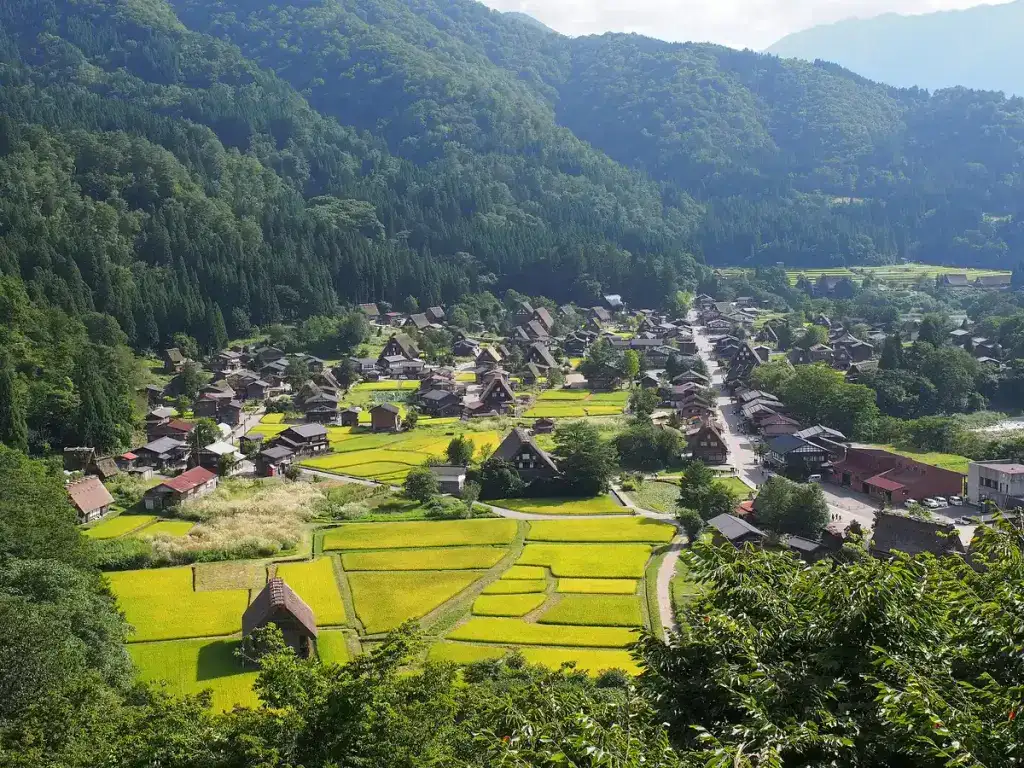
Ogimachi seen from the observation area. This daytime view does not establish light-up or observation-deck admission. · 吉爾 · CC BY-SA 2.0 · Wikimedia Commons · Resized and converted to WebP
Some booking links may earn us a commission at no extra cost to you. How we fund this guide.
When is a tour better than going independently?
Choose a tour when its meeting point and return arrangements fit your accommodation, and when the package solves a real problem. That could be transport confidence, a guided cultural introduction or a confirmed special-event arrangement.
Independent travel may suit you better if you want control over a house visit, meal stop or photography time. Compare both options using the complete day. “No planning needed” is not an adequate substitute for knowing how you get to the meeting place and back to your hotel.
Which details deserve the closest comparison?
Look for a clear account of time in Shirakawa-go, not just the total tour duration. Read whether walking is guided or free time, which admissions are included, and whether the advertised viewpoint is actually part of the itinerary.
Confirm guide language separately from the language of the sales page. A translated booking description does not establish that the guide will speak that language. Check group meeting instructions and late-arrival policy before paying.
Are multi-stop tours worth it?
A combined itinerary can suit travellers with limited time, but each additional place reduces the time available elsewhere. Decide whether you want an overview or a more relaxed village visit. A short photo stop should not be mistaken for enough time to explore a heritage house and eat lunch.
For an Okuhida itinerary, check the return point carefully. A tour ending in Takayama does not automatically coordinate with your final bus to a mountain ryokan. Consider using a Takayama night for the tour day.
What should you check in winter?
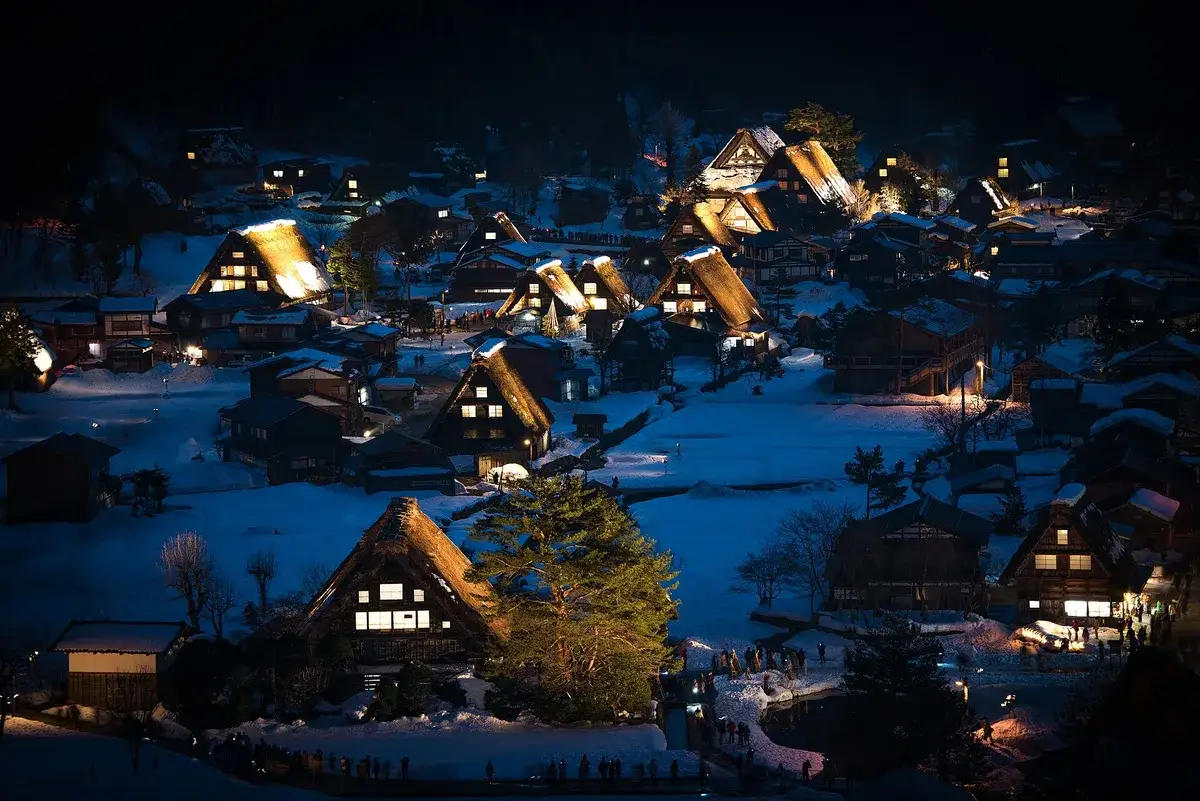
Establish whether you are buying a normal winter daytime excursion or official light-up access. For the latter, get explicit confirmation of event admission, permitted viewing areas and the return journey. Do not infer those from a snowy evening photograph.
Read cancellation and disruption terms. Ask what happens if road or weather conditions alter the programme and whether a replacement itinerary is optional. A clear policy is more useful than a vague promise that the tour operates in every condition.
For photographers, ask whether the itinerary allows free time rather than only escorted group stops. For slower walkers, ask about the actual terrain between the vehicle and village.
Which option fits your trip?
| Option | Suits | Check before booking |
|---|---|---|
| Independent bus trip | Flexible village exploration | Outbound and return seats |
| Single-destination tour | Simpler transport arrangements | Actual village time and meeting point |
| Multi-stop tour | A regional overview | Time lost to extra travel |
| Light-up package | Organised winter event visit | Explicit admission and return arrangements |
What are the main kinds of Shirakawa-go booking?
Separate scheduled bus travel, transport-only excursion tickets, guided tours and special-event packages. They may all appear beside similar village photographs, but they solve different problems. The product title is only the starting point; the inclusion list establishes what you are buying.
A scheduled bus gets you between named stops under the operator’s conditions. A transport excursion may coordinate a return but leave the village visit self-guided. A guided programme can add explanation or organised walking. A light-up package needs explicit event access and the relevant evening arrangements; ordinary sightseeing does not establish those.
Start by deciding which support you need. If your priority is flexible time inside a heritage house, a tightly scheduled multi-stop tour may be a poor fit. If booking seats and navigating a return is the concern, transport support may be enough without a guided walk. Use the independent day-trip guide as the baseline, then compare whether a package adds a benefit you will actually use.
Which departure town should you choose for an Okuhida itinerary?
Choose the departure that fits your accommodation and the end of the day, rather than the first familiar city in the search results. A Takayama start is different from a Nagoya start, and neither establishes pickup from an Okuhida ryokan. Read the full meeting address before reserving.
If the tour begins early in Takayama, compare a city night beforehand with travelling from your mountain hotel. Include the walk from the hotel, the first bus, any interchange and the tour check-in requirement. A possible connection in a journey planner is not necessarily a comfortable way to start an organised excursion.
Check the return town with equal care. Some tours may continue elsewhere or finish at a different place from the meeting point. If you need to reach an Okuhida inn for dinner, verify the whole return chain. A Takayama stay can remove that constraint and let you use the tour day without depending on the final mountain connection. Choose the overnight sequence before treating a product as convenient.
How much village time is enough for your priorities?
Compare the time actually spent in Shirakawa-go with the activities you want to do. The advertised total duration includes transport and possibly other destinations. It does not tell you how long you can walk, enter a house, eat or visit a viewpoint.
Make a short priority list before reading products. If you want one heritage-house visit and an unhurried meal, check whether the free-time block supports both. If you mainly want an overview and photographs, a shorter stop may suit you. Neither is universally better; the mismatch happens when a photo-stop itinerary is sold in your own mind as a leisurely village day.
Ask about the route between the vehicle and the village if the group walks slowly. Waiting for everyone to gather, using toilets and finding lunch also use the available stop time. Avoid evaluating a tour only by the number of attractions in its title. A programme with fewer destinations can offer more of the experience you care about, even when another listing appears to include more.
What does a guide add beyond transport?
A guide can add cultural interpretation, route organisation and help understanding the places you visit. Confirm what the guide actually does: accompanies the group throughout, provides an introduction before free time, or mainly coordinates the vehicle. A tour with an escort is not necessarily a fully guided village walk.
Check the spoken language rather than the language of the sales page. If several languages are offered, ask how the commentary is delivered and whether it changes the walking pace. For a private booking, explain the group’s interests and ability before expecting a tailored programme.
Do not infer specialist support from the word guide alone. A cultural sightseeing guide is not automatically a winter walking instructor or a mobility assistant. If your group needs particular help, ask directly and choose a programme whose description establishes it. For independent travellers comfortable with transport and maps, a guide should add something beyond repeating the route information. The regional tours guide helps identify which kind of assistance is relevant to your wider trip.
When is a Gokayama or multi-destination combination worthwhile?
A combination suits travellers who want a regional overview and accept less time at each stop. It is less suitable when Shirakawa-go itself is the day’s main interest or when the group needs a slower walking pace. Compare the actual stop sequence and village time before choosing the longest attraction list.
Check whether a second village visit adds a different experience or mostly another short photography stop. Ask which admissions are included and which parts are free time. A programme can visit several places while leaving little room for an interior house visit or a relaxed meal.
For an Okuhida holiday, consider the surrounding days too. If you already have several full transport days, a simpler Shirakawa-go visit may provide a better balance. If you have limited time in the region and want an introduction to multiple landscapes, a combination may be useful. Choose deliberately rather than assuming more stops represent greater value. The important comparison is how the day feels, not how many place names fit in the title.
Which inclusions should you verify line by line?
Check transport, guide service, admission, meals and the return separately. Then check the exceptions and optional purchases. An entry in a general itinerary does not always mean admission is included, and a lunch stop does not establish that food is provided.
For electronic tickets, read the redemption instructions and what must be shown on arrival. For a guided departure, check the check-in point, late-arrival rule and how the organiser contacts you. If several travellers are on one booking, make sure the guest details and child arrangements match the actual group.
Keep a copy of the selected option, not only the generic product page. A listing may contain several meeting points or programme variants. Confirm that the date and option in your reservation are the ones you compared. If a viewpoint or heritage house is essential, look for explicit wording rather than relying on an image. Ask the operator to resolve an unclear inclusion before payment, especially when the alternative would materially change your reason for booking.
How is a winter daytime tour different from a light-up tour?
A winter daytime tour visits the village under ordinary sightseeing arrangements; a light-up tour must establish the special event’s reserved evening access. A snowy landscape photograph does not distinguish the two. Read the selected date, event wording and inclusion list carefully.
The official light-up announcement states that advance reservations are required and visitors without them are not admitted. Confirm how the package meets that requirement, which viewing areas it includes and how the return journey works. Do not treat a regular bus reservation as evening entry. Use the light-up planning guide before booking accommodation around an event product. If the listing offers only daytime travel, evaluate it as a daytime trip. There is no reason to reject a good ordinary winter visit, but it should not be mistaken for a different experience. A precise description is more useful than a broad promise of magical winter scenery.
What cancellation and disruption questions should you ask?
Ask what happens if the road, weather, event or minimum operating conditions affect the programme. Read whether the operator offers a replacement itinerary, cancellation or another arrangement, and how your choice is communicated. A general flexibility label may not answer every situation.
The bus operator’s route information warns that traffic and winter disruption can affect travel. Leave room after a tour before committing to a train or mountain-hotel dinner. A tour returning later than advertised may be a transport problem without automatically creating a refund for your separate booking.
For private tours, check the scope of any customisation and whether changes need agreement beforehand. For families, ask how a child’s inability to participate is handled. Keep the provider’s contact details with your confirmation. Choose a product whose actual conditions you understand, then preserve a workable evening. A reliable booking is one that fits the whole trip even when the village walk takes longer or the road journey is less predictable than expected.
How should you compare private and group tours?
Compare the programme and flexibility actually promised, rather than assuming private always means fully customisable. A private departure may still use a fixed route, set admission arrangements or a defined pickup area. Ask what can change, what needs agreement beforehand and whether the proposed pace fits your group.
For a group tour, read the meeting and free-time rules. You may need to keep the same return time even if a meal or house visit takes longer than expected. A smaller group does not automatically mean more village time, and a larger vehicle does not establish a less informative guide. Evaluate the features that affect your priorities.
Families should confirm child seating and participation requirements; slower walkers should ask about the actual route from the vehicle. If those needs cannot be accommodated, an independent visit or a different programme may be more comfortable. The best format is the one whose normal operation suits you, rather than one that would require the operator to make exceptions throughout the day.
What should you save after booking?
Save the selected option, date, meeting address, check-in instructions, inclusion list and cancellation terms. Include the provider’s contact and the return point. Keep these offline and share them with another traveller, especially when one person manages the whole group’s reservation.
Re-read the confirmation against the plan you intended to buy. Check the departure town, guest count, child details and whether the booking is confirmed or awaiting acceptance. If something differs, resolve it before arranging tightly connected hotels or trains. A product page and a final selected option can describe different meeting locations or inclusions.
Shortly before departure, check provider messages and relevant official notices. Do not assume a saved confirmation means no further instructions will arrive. Keep the independent route information available as context, while following the booked operator’s actual meeting procedure. Once the essential details are clear, leave room to enjoy the village rather than continuing to compare products after every decision has already been made.
Where should you go next?
Continue planning with Shirakawa-go from Okuhida, Shirakawa-go winter light-up, Okuhida tours and experiences. Start with the Okuhida travel guide if you are still choosing a village base.
Your questions, answered
Do tours depart from Okuhida?
Check the exact meeting point on the product you are considering. A tour marketed to visitors in the wider Takayama area may depart from Takayama rather than a hot-spring village. Include the journey to and from that meeting point before deciding whether the package is convenient.
Are entrance fees included?
Read the inclusions for the specific tour. Transport, guided walking, heritage-house admission, meals and viewpoint access can be separate items. Do not treat a general statement about sightseeing as confirmation that every stop includes entry. Ask the operator if an important component is unclear before booking.
Does an English sales page mean an English guide?
No. Booking language and guide language are separate features. Check the named guiding language and whether commentary is live, recorded or absent. If interpretation matters to your group, ask for confirmation rather than assuming a translated listing promises a guide who can answer questions in English.
Can children join?
Check age limits, child bookings, seating and walking expectations directly with the operator. Provide the ages of everyone travelling. A family-friendly label does not explain whether a young child needs a separate seat or can manage the planned walking, particularly on winter surfaces or during an evening event.
Should I book a light-up tour early?
Investigate official arrangements as soon as the event programme and authorised products are announced. Availability can be limited, but do not pay for an unclear product simply because it sounds scarce. Confirm the event date, admission and return point before making the rest of your accommodation plan depend on it.