Gifu, Japan · The Northern Alps
Okuhida in Winter: Snow, Buses and Ryokan Planning
Plan Okuhida in winter around the ryokan, meals and a manageable arrival, with mountain outings kept flexible. Check current bus and road notices, confirm winter equipment if driving and verify the ropeway’s service information. The ordinary Kamikochi visitor-season itinerary needs a different plan during winter.
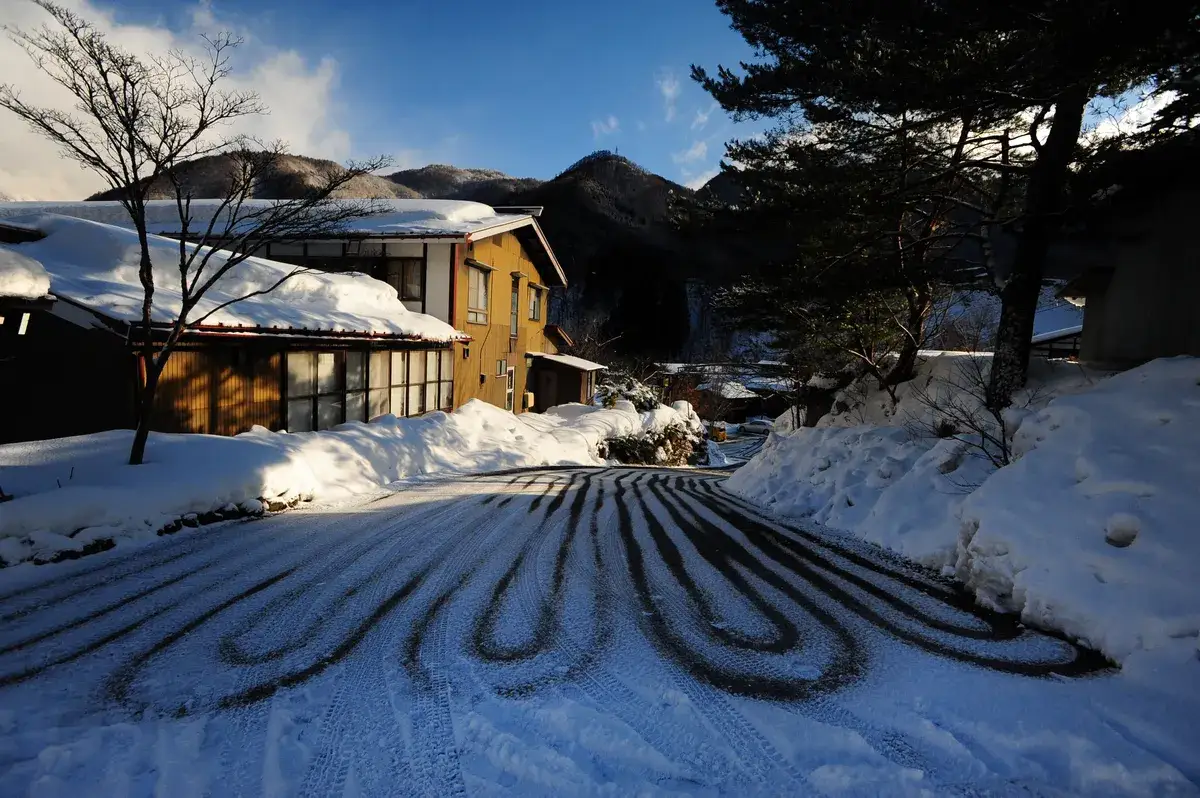
Archive winter streetscape in Fukuchi Onsen; snow conditions vary. · Jenny from Taipei · CC BY 2.0 · Wikimedia Commons · Resized and converted to WebP
Some booking links may earn us a commission at no extra cost to you. How we fund this guide.
Is Okuhida worth visiting in winter?
Choose winter for a ryokan-focused stay and a landscape that may be snowy, while keeping mountain outings flexible. Do not choose the season on the assumption that every summer attraction or connection remains available.
The strongest winter plan gives the inn, meals and bathing enough time to be satisfying even if an outdoor visit is reduced. A room you want to spend time in and an arrival you can manage comfortably are more dependable priorities than a list of weather-sensitive views. Our advice is to choose the overnight experience first, then add the ropeway or another activity when the current conditions support it.
Okuhida’s tourism association specifically warns of winter snow and ice on roads and advises appropriate winter equipment and driving behaviour. That guidance matters even if the route appears short on a map or the city where you collect a car is clear. Mountain conditions belong in the transport decision before a rental is booked.
Start with the Okuhida regional guide to understand the villages, then compare accommodation around the actual arrival route. A convenient stop and a confirmed pickup can make a bigger difference in winter than a marginally shorter distance to an attraction.
Is the bus or a rental car the better choice?
Choose according to your winter-driving experience, the specific route and current service conditions. A car offers flexibility only when you can use it competently and the equipment and road conditions support the journey.
For a bus-based stay, check the dated Nohi Bus timetable, current notices and your accommodation’s nearest stop. Confirm the walk from that stop with luggage, including whether the property recommends a transfer. The final approach can be the most awkward part of an otherwise simple journey if it involves snow, darkness or a steep path.
For a rental car, ask the company what winter equipment is supplied for your route and what you are expected to carry or fit. Do not assume the vehicle is prepared merely because the booking dates fall in winter. Confirm the collection location, intended roads and any restrictions before paying for a plan you may not be comfortable driving.
Avoid describing winter equipment as a guarantee of safe passage. Driver judgement, visibility, road notices and the ability to change the plan remain important. If you are unfamiliar with snow or ice, a bus-based accommodation choice may better suit the trip than using the holiday to learn mountain winter driving.
| Arrival choice | What it can simplify | What you still need to confirm |
|---|---|---|
| Bus with an inn near the stop | Driving and parking decisions | Current service, luggage approach and dinner arrival |
| Bus with a property transfer | Final luggage walk | Pickup availability, reservation and meeting place |
| Winter-equipped rental | Carrying bags between selected stops | Equipment, competence, roads and parking |
| Night in Takayama before Okuhida | A rushed same-day arrival | Next day’s route and current notices |
How should you choose a winter ryokan?
Choose a property whose room, meal and bath arrangements work independently of sightseeing. In winter, the accommodation is often a substantial part of the trip rather than simply the place between outings.
Ask how you will reach the entrance from the bus stop or parking area. Check stairs, luggage assistance and the route to dinner and bathing if these affect anyone in the group. Broad labels such as traditional, accessible or family-friendly are less useful than an answer about the actual room and facilities you will use.
For a private bath, confirm the exact arrangement. An outdoor bath may be shared; an en-suite bathroom may not use hot-spring water; a reservable bath may need a separate allocation. Ask how weather affects the facility and whether the room or plan you choose gives the access you expect. Policies should be confirmed directly rather than inferred from winter promotional photographs.
Read the private-onsen accommodation comparison before fixing a room category. If tattoos, children or dietary requirements affect the stay, resolve them before the booking becomes restrictive. A remote setting is less forgiving of discovering an unsuitable meal plan after arrival.
A two-night stay can create a useful weather buffer and reduce packing, but it is a planning choice rather than a universal requirement. A carefully timed one-night stay can also work if you arrive without rushing and leave room for the morning meal.
Can you visit Shinhotaka Ropeway in winter?
Investigate it as a possible winter outing, then check the operator’s current information before travelling. The ropeway’s seasonal timetable and service notices matter more than a general statement about its usual operation.
The operator describes service as subject to weather and maintenance. Read the current timetable and check which parts of the facility are available rather than assuming that a ticket on sale guarantees every outdoor space or viewpoint. A return to the inn can be a better decision than committing the whole day to poor visibility.
Prepare for the attraction you are actually visiting. A lift-based sightseeing trip is not the same as a mountain walk beyond the visitor facilities. Do not follow a trail simply because other people are carrying equipment or because it appears close to the station. Use official local advice for any route beyond the ordinary visit.
Read the Shinhotaka Ropeway planning guide and choose a return connection before adding optional stops. Build the outing around the bus back and the ryokan’s meal time. A flexible plan tells you what to shorten when queues or weather consume more time than expected.
For children or seniors, think about waiting and moving between spaces as well as the gondola ride. Pack the layers they will need while stationary and agree where the group will meet if anyone wants to go indoors earlier. A shorter visit can still be worthwhile when it matches the group’s comfort.
Can you use the usual Kamikochi itinerary?
Do not carry the ordinary visitor-season day trip into winter unchanged. Check the official winter access information and treat specialist winter travel as a separate undertaking from this ryokan itinerary.
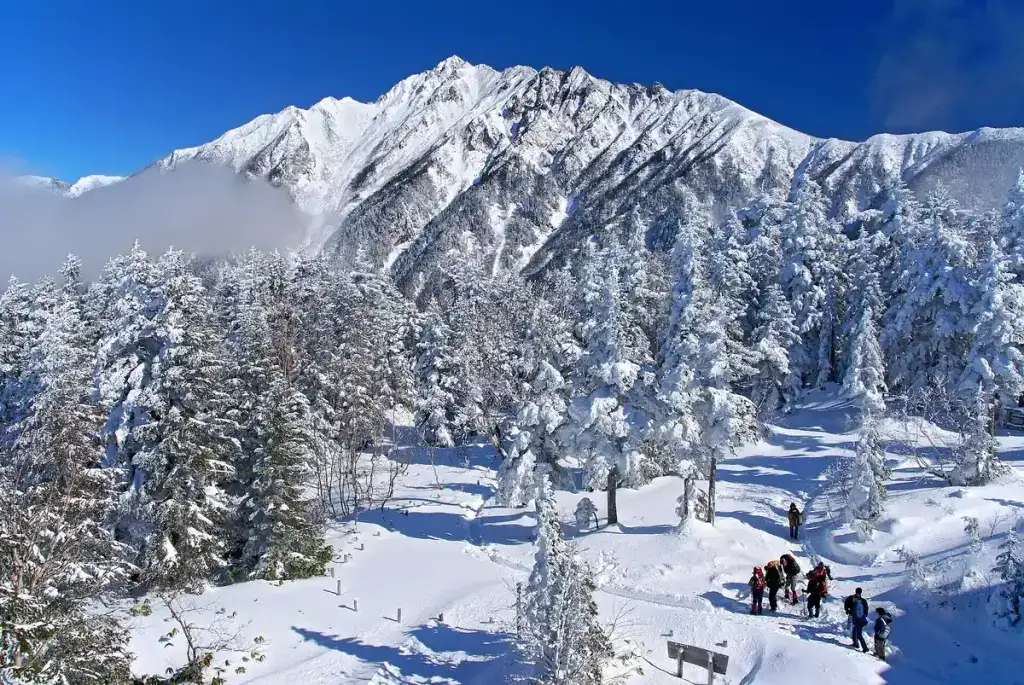
Kamikochi’s official visitor information describes an ordinary season broadly from mid-April to mid-November, with seasonal facilities and services. A winter mountain environment is not an interchangeable version of a summer valley stroll. This guide does not provide a winter entry route, equipment prescription or promise that facilities will be available.
If you booked Okuhida mainly for a Kamikochi outing, revisit that decision before reserving winter dates. The Kamikochi season guide helps separate the usual sightseeing period from dates requiring a different plan. An appealing photograph of snow around Kappa Bridge does not establish a suitable casual day trip.
Choose a winter itinerary that remains coherent without Kamikochi. Takayama town time, a settled ryokan stay and a conditional ropeway outing can provide enough variety for a short visit. Adding an unsuitable excursion simply to preserve the original place list weakens the trip.
What if snow or road conditions disrupt your journey?
Decide in advance what you will do if the planned bus or road is affected, and tell your accommodation as soon as a delay becomes likely. Winter disruption is a planning scenario, not a reason to avoid the season, but it is easier to handle when the fallback is already agreed. Check the official bus and road notices on the day before travel and again before the mountain leg, and treat a notice as more reliable than a forecast or a social-media photograph.
A practical fallback has three parts: where you would wait, how you would contact the inn, and what you would do about dinner. Ask the property whether a late arrival can still be served a meal and whether it has any guidance for a delayed transfer. Do not assume the kitchen or reception can accommodate any hour, and do not plan the last connection of the day as though it were certain. If you have booked a pickup, give the inn your phone number and ask what it prefers you do when plans change.
If the mountain leg looks unsafe or unavailable, staying overnight in Takayama can be a sensible reset rather than a failure. The Takayama transport guide explains the gateway so that you can compare the town stay with the alternative of pressing on. A cancellation or change fee may apply to the ryokan, so read the booking conditions before travelling and keep the confirmation where you can find it offline.
Travel insurance, if you hold it, is worth reading for weather-related disruption, since policies differ. Do not assume that a delay will be covered; check the policy wording yourself. Keep screenshots of the booking, the property’s contact details and the official notice that explains the disruption, because those make later conversations with the inn or an insurer easier.
Can you enjoy the onsen itself in cold weather?
Yes, winter is a natural time for bathing, but it asks for a little more preparation than a mild day. Plan what you will wear between the changing room and any outdoor bath, how you will keep warm while waiting your turn for a reservable bath, and what you will drink afterwards. The onsen etiquette guide covers the basic routine, which does not change in winter.
Cold air makes the walk between spaces more noticeable, so follow the property’s route and any barriers rather than improvising a shortcut. Outdoor baths can be closed or limited when weather makes them unsafe, and an inn is within its rights to restrict access. Ask whether the facility you care about is operating on your dates, and choose a room whose appeal does not rest on one bath alone. This guide does not prescribe a temperature or length of soak; follow the property’s notices and your own comfort.
If you have a health condition, such as a heart or blood-pressure concern, ask a medical professional about hot bathing before you travel. Hot water after cold air affects people differently, and the right advice depends on your circumstances. Travellers with tattoos should read the tattoo planning guide and obtain the property’s answer for the exact bath before relying on any private option.
What should you pack and arrange before departure?
Pack for the actual walks and waiting periods in your itinerary, and keep essentials accessible before you reach the inn. Clothing buried in a stored suitcase does not help at a cold bus stop.
Ask the accommodation what it recommends for the final approach and which items it provides inside the property. Bring footwear appropriate to the conditions you expect and consider how you will manage luggage with both hands occupied. A smaller overnight bag can be easier than a large case when your wider journey allows a confirmed storage or forwarding arrangement.
Keep medication, documents, power and communication essentials with you. Save the property address and contact details so a delay can be reported without relying on searching several apps. Discuss who will contact the inn if the group is delayed and who will monitor the transport notices.
Do not treat packing as a substitute for changing an unsuitable plan. If the forecast or official notice makes an outing unreasonable, the useful response may be staying at the accommodation or travelling on a different day. The Takayama and Okuhida itinerary offers a shape that can be simplified without losing the purpose of the stay.
How do you keep a winter schedule flexible?
Leave one important decision open until conditions are clearer, while confirming the essentials that cannot wait. Accommodation, meal needs and arrival arrangements deserve certainty; a mountain-view outing can remain conditional.
Avoid tying the last mountain bus to an important onward departure with no practical alternative. If missing a flight or intercity booking would be costly, consider moving closer to the departure point the previous night. The shortest possible connection is not automatically the most sensible one for a winter trip.
When travelling with others, agree what a successful poor-weather day would look like. That might mean a quiet breakfast, another permitted bath session and a meal rather than a sightseeing circuit. Setting those expectations before travel makes it easier to enjoy the place you chose.
Recheck conditions at useful points: before leaving your gateway city, before the mountain transfer and before the day’s outing. Avoid repeatedly refreshing a forecast without making a decision. Pair each check with an action, such as choosing an earlier bus, confirming pickup or dropping an optional stop.
End with a plan that has room for the season. Winter scenery is an attraction, but dependable arrival, appropriate preparation and an inn you are glad to spend time in are what make the whole visit work. You should be able to remove a weather-dependent outing and still recognise the holiday you wanted.
Your questions, answered
Do I need a car for Okuhida in winter?
A car is not automatically necessary. You can investigate a bus-based stay with a ryokan near an appropriate stop or a confirmed property transfer. Check the current route, final luggage approach and meal arrival requirements. Choose a rental only after considering winter equipment, road conditions and your own ability to drive in snow and ice.
Will there definitely be snow at my ryokan?
Do not book on a guarantee of snow at a particular property or on a particular day. Check current conditions as the trip approaches and choose a stay you would enjoy regardless of the view. Winter photographs show a possible scene, rather than a promise about the conditions for your exact room and travel dates.
Can I visit Kamikochi as a normal winter day trip?
Do not use the ordinary visitor-season itinerary unchanged. Check the official winter access information and distinguish specialist mountain travel from a casual valley visit. This guide does not provide a winter entry plan. If Kamikochi sightseeing is essential, consider dates within the current ordinary visitor season and confirm the transport separately.
Should I book the ropeway before checking the forecast?
Read the selected ticket’s conditions and the operator’s current service information before deciding. Weather and maintenance can affect the visit, and visibility is a separate question from whether a service runs. Keep transport and dinner requirements in view so a ticket purchase does not pressure you into an unsuitable outing.
How many winter nights should I spend in Okuhida?
One night works when arrival and departure leave enough time to enjoy the accommodation. Two nights reduce packing and can give you a flexible day for conditions, but they also mean spending more of the trip in the same area. Choose according to your interest in the inn, meals and bathing rather than a fixed sightseeing quota.
What should I do if winter weather delays my bus to Okuhida?
Contact the accommodation as soon as the delay is likely and check the official bus notice rather than relying on a forecast. Ask whether a late meal or alternative pickup is possible, and keep your booking confirmation offline. If the mountain leg is not reasonable, staying overnight in Takayama can be a sensible reset.
Are outdoor baths open in winter?
Do not assume every outdoor bath is available on every winter date. Weather and safety can limit access, and a property may close or restrict a facility. Ask whether the bath you want is operating for your dates and whether it belongs to your room or plan. Choose a stay that still appeals if that bath is unavailable.