Gifu, Japan · The Northern Alps
Okuhida with Kids: Baths, Ryokan and Easy Outings
An Okuhida family trip works best with a convenient village base, clearly confirmed child policies and a flexible bathing plan. Ask the ryokan about children before booking, including meals, bedding and bath access. Plan one main outing per day rather than fitting every mountain attraction between breakfast and dinner.
Some booking links may earn us a commission at no extra cost to you. How we fund this guide.
Which family plan is easiest to organise?
Choose the plan whose arrival, bathing and outing arrangements work together for every member of the family.
| Family priority | Start by comparing | Confirm before booking |
|---|---|---|
| Fewer transfers | Hirayu accommodation near a suitable stop | Exact hotel approach with bags |
| Bathing together privately | Confirmed exclusive-use bath | Age, diaper and changing rules |
| A mountain day | One manageable outing | Open route, weather and return bus |
| An early city tour | Takayama night before departure | Actual meeting address and check-in procedure |
Which village works best for a family?
Choose your base around the arrival journey and the activity you most want. Hirayu is worth investigating when transport changes and Kamikochi access matter. A quieter village may suit a family seeking more time at the inn, but the final hotel transfer still needs to work.
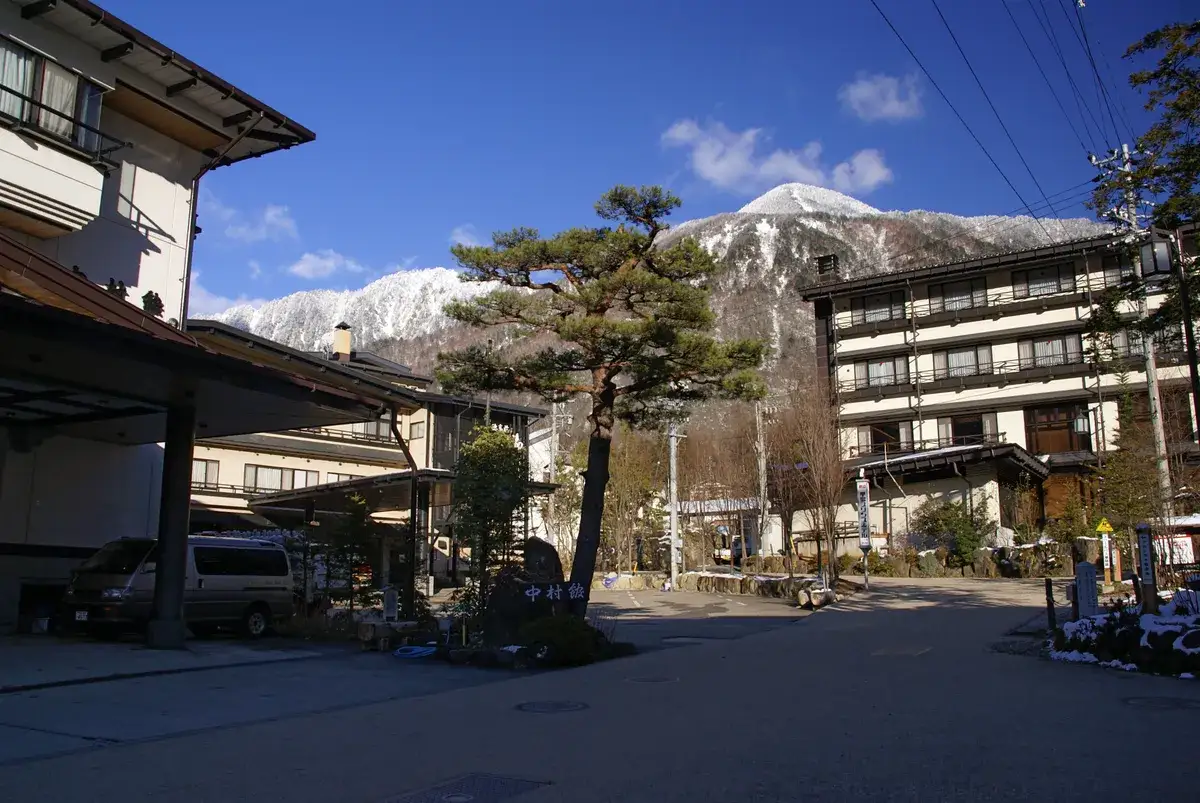
Check the exact property address and stop. Carrying a tired child and several bags along an unfamiliar road is a poor start to a ryokan stay. Ask about pickup arrangements rather than assuming a village label means a short, level walk.
What should you ask before booking a ryokan?
Give the property every child’s age and ask how meals and bedding are handled. A child sharing an adult’s bed or futon may still need to be included in the reservation. Confirm whether the selected room and meal plan accept your whole party.
Ask about stairs, dining arrangements and any room features important to your family. A floor plan is more informative than a photograph of a spacious-looking room. If your child has food requirements, get a specific response before choosing a plan built around a fixed evening meal.
How do you plan bathing as a family?
Ask about diapers, children’s admission and any age-related rules for communal bathing. Do not assume siblings or an accompanying parent can use whichever changing area is most convenient. If that complicates supervision, investigate an exclusively used private bath.
Establish whether a private bath is in your room, reserved by a time slot or allocated another way. Do not turn it into a swimming session. Keep children closely supervised and follow the facility’s instructions; if a child is uncomfortable or unwell, skip the soak rather than making it the goal of the day.
Which outings are easier to manage?
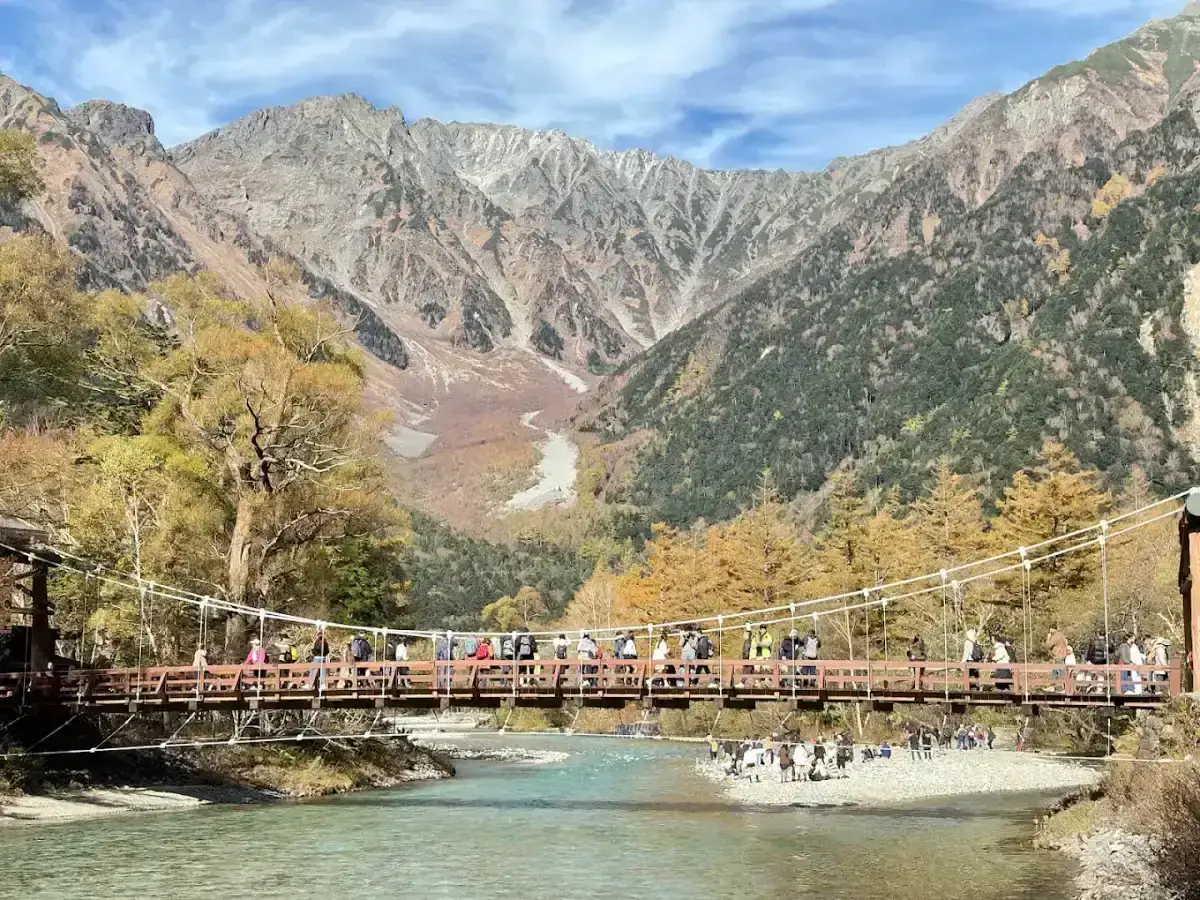
Choose one destination and keep the return flexible. A short village outing or a modest Kamikochi valley walk can be more satisfying than collecting distant stops. A ropeway excursion still involves weather, queues and warm clothing, while a walk should fit the youngest traveller’s stamina.
Pack snacks and layers where you can reach them without unpacking the suitcase. Save the return timetable offline and protect the meal time agreed with your inn. Leave space for a quiet afternoon; the family does not need a second excursion merely because there is daylight left.
What kind of Okuhida itinerary works best with young children?
Plan a comfortable base, one main outing and enough time at the accommodation. This is more adaptable than a list of mountain attractions tied together by the last available bus. A young child may enjoy the journey and a short walk while having little interest in completing an adult’s sightseeing circuit.
Choose the outing according to the day’s conditions and the child’s energy. A river walk, a ropeway ride and a waterfall approach make different demands. Keep a shorter version ready before departure, including somewhere to sit and eat. Avoid promising a panoramic view, snow play or wildlife sightings when those depend on conditions.
If travelling with grandparents, set the shared day around the slowest comfortable pace. Adults can take turns on optional walks, but the meeting place and transport home should be clear. Read the Okuhida itinerary guide as a structure, then remove stops rather than trying to reproduce every suggestion. A family trip has more practical transitions between activities, even when the map distances look modest.
How should you compare family room and meal plans?
Compare the same adults, children, bedding and meals across every plan. Give each child’s age accurately, including a child who shares a futon or bed. A reservation accepting two adults does not establish that an additional child is included or that the room’s occupancy rules allow the whole family.
Ask whether a child’s evening meal differs from the adult meal and whether any dietary requirement can be accommodated. Get a specific response before choosing a plan whose central experience is dinner. Avoid assuming plain food, a microwave or a late meal will be available unless the property confirms it.
Look at the room layout as well as the sleeping capacity. Check steps, stairs, access to toilets and the practical route between the room, dining area and baths. If separate rooms are necessary, ask about their location rather than expecting adjacent allocation. The ryokan comparison guide helps identify candidate properties, but every selected plan still needs a family-specific check. Attractive general photographs cannot answer those booking questions.
What bathing arrangement is easiest for a family?
A confirmed private-bath arrangement can simplify supervision and privacy, but it needs to fit the children’s ages and the operator’s rules. Ask whether it is a room-attached onsen or a shared bath used exclusively for a slot. Those arrangements have different booking and waiting implications.
Clarify whether the bath has a washing area, how adults and children change and how the slot is allocated. If the private bath is first-come, decide what you will do if it is occupied at your preferred time. An included bath is not necessarily a guaranteed appointment immediately after dinner.
For public baths, ask which adult may accompany each child and whether age-related restrictions affect the plan. Do not assume that every family can enter one changing room together. A couple may need to bathe separately while supervising a child. Use the private-onsen guide to compare formats, and ask the individual property for the final rules. Family accommodation and family bathing are related but separate parts of the reservation.
What should you ask about babies and children who use diapers?
Ask the facility directly about minimum ages, diaper rules and whether a private arrangement changes admission. Do this before booking a stay or day visit around a shared family soak. A general family policy does not establish permission to bring an infant into every pool.
Keep the request factual: provide the child’s age, the bathing format you are considering and any practical needs. Ask about changing facilities and what you should bring. Do not assume a baby bath, suitable washing equipment or a place to leave a stroller will be available. If the answer is unclear, choose a plan that does not depend on that facility.
Some families may prefer adults taking turns to bathe while the child remains comfortably supervised elsewhere. Others may choose accommodation with an ordinary bathroom for the child’s routine. A private bathroom is still distinct from a private onsen, but it can be useful for family logistics. Treat bathing as an optional part of the holiday when the operator’s rules or the child’s comfort make it unsuitable.
How can you make bus travel easier with children and luggage?
Reduce transfers where possible and keep the day’s essentials in a small accessible bag. Snacks, spare clothing, tickets and the hotel’s Japanese name should not be buried in the suitcase. Assign one adult to the child and another to retrieving bags when arriving at an interchange.
Ask about the route from the final stop to the property before travelling. A short distance on a map may involve a slope, road edge or snow. Confirm any pickup arrangement and the point where staff expect you. A booking under the Okuhida name does not mean the inn is beside Hirayu terminal.
At Hirayu Bus Terminal, confirm the next boarding point before taking a long break. Avoid carrying a sleeping child and several loose bags between queues at the last moment. If a stroller must be folded for transport, practise the bag arrangement before the journey. Keep an arrival buffer so a toilet stop or a delayed bus does not immediately turn into a missed dinner.
Should families stay in Hirayu or another onsen village?
Compare the hotel journey and your main outing first. Hirayu is a useful candidate when several planned journeys connect through its terminal. Another village may suit a family spending more time at the inn, especially when the property confirms an easy final transfer and appropriate room arrangements.
Do not assign a universal family-friendly label to a village. The actual property matters: stairs, meals, room size, bathing policy and the walk from the bus can outweigh the general location. A quieter setting is only comfortable if the arrival and everyday practicalities work for your family.
If the holiday includes an early tour departing from Takayama, consider a city night before that activity rather than relying on the first bus from a mountain ryokan. Compare the Hirayu accommodation guide with your chosen inn in the other villages. A split stay may be useful when it removes a difficult morning connection. Keep the number of hotel changes proportionate, though; repacking itself can be the most tiring part of a family itinerary.
Which outings should you compare for a family mountain day?
Choose between Kamikochi, Shinhotaka Ropeway and a shorter local outing according to the season and the whole group’s interests. Kamikochi is a walking-based valley visit; the ropeway centres on transport and elevated views. A waterfall outing can be smaller in scope, but its current approach still needs checking.
For Kamikochi, choose a short route before deciding whether to add more. Read the valley walking guide and confirm current paths, transport and visitor rules. For the ropeway, check operation and the suitability of the open outdoor areas; the ride does not guarantee clear views or unrestricted snow play. Avoid making both major attractions compulsory in one family day. Combining them reduces time for food, toilets and resting. If booking a package, read the pace and actual walking programme rather than assuming organised transport makes the outing gentler. An independent shorter excursion may give you more control over when to return.
How do you keep meals, baths and bedtime from competing?
Protect the evening by choosing an outing that returns comfortably before the property’s agreed meal arrangements. A traditional inn stay is often built around dinner and bathing, so arriving with exhausted children can undermine the experience you booked. Ask about the dining sequence before deciding on a late afternoon excursion.
Pack a modest food fallback for the journey while checking the property’s policy about eating in rooms. Do not assume you can replace an included dinner with a nearby restaurant after arrival. If your child needs an early meal or a particular routine, explain that before booking and choose a plan that can accommodate it.
Leave bathing flexible. Adults may prefer separate turns rather than trying to fit the whole family into one narrow interval. Prepare dry clothes and sleeping arrangements before the child becomes overtired. The day-use bathing guide is useful if you would rather separate the onsen experience from the overnight stay. A comfortable family trip is one whose routine works even when the main outing is shortened.
What should you check before taking a stroller to an outing?
Check the actual route and boarding requirements, rather than assuming an attraction suitable for children is suitable for a stroller throughout. A short nature walk can include steps, uneven surfaces or a narrow path. A bus journey may require folding and handling the stroller alongside luggage.
Ask the accommodation about the approach from the stop and where the stroller can be left. For a cave, waterfall or valley walk, ask about the specific open section you intend to use. If carrying the stroller would be the only way to continue, decide whether the route is really appropriate before arriving there with a tired child.
Keep the alternative simple. A shorter visitor-area walk or a village afternoon may be more comfortable than trying to complete an adult route with equipment that does not fit it. If using a carrier, consider the adult’s comfort and footing too. No single item removes the need to choose a realistic route; it only changes how the group manages part of the journey.
How do you plan a fallback that still feels like a holiday?
Choose a fallback with its own appeal, rather than a list of things to do only if the main day fails. That might be more time at the inn, a short village walk, a suitable day bath for one adult at a time or a relaxed town visit when the transport works.
Tell the child what the day may include without promising a weather-dependent sight. If the ropeway view is hidden or a path is unsuitable, the family can still enjoy the ride, the room or an agreed smaller outing. Adults benefit from that flexibility too, especially when grandparents have different walking stamina.
Keep enough food and dry clothing for a change of plan, and avoid booking every afternoon into a separate commitment. A family holiday often becomes easier when one part of the day remains open. You are choosing a rhythm that works for your own group, not completing every attraction associated with the region. A comfortable meal and an unhurried evening can be as valuable as another viewpoint.
Where should you go next?
Continue planning with Ryokan with private onsen, Okuhida day-use baths, Onsen etiquette, Hirayu Onsen guide. Start with the Okuhida travel guide if you are still choosing a village base.
Your questions, answered
Are all Okuhida ryokan child friendly?
No single child policy applies to every property or room plan. Give the hotel the children’s ages and check that your selected reservation includes them correctly. Ask about meals, bedding and bathing access before paying, especially when a booking platform displays a room suitable for only part of the family.
Is a private bath better with children?
It may simplify privacy and supervision, but its availability and rules need confirmation. Ask whether it is attached to your room or shared by reservation, and whether children of your child’s age can use it. A private bathroom on a listing does not necessarily contain an onsen bath.
Can babies enter an onsen?
Ask the individual facility about age and diaper rules before planning a bathing visit. Do not infer permission from the availability of family rooms. If bathing is unsuitable, you can still choose accommodation and outings that work for the family without making a shared soak an essential part of the trip.
Do we need a rental car?
A car can simplify some journeys but also introduces parking, winter driving and restricted mountain access. A bus-based stay can work when the hotel stop and planned outings align. Compare the whole trip, including luggage and the final arrival, rather than deciding only from the number of attractions on your map.
Should we visit Kamikochi and the ropeway in one day?
For many families, choosing one is more comfortable. Both require transport and weather planning, leaving less time than expected for walking, food and breaks. Separate days allow you to adjust to conditions and your child’s energy instead of trying to protect a tightly packed schedule at every stage.