Gifu, Japan · The Northern Alps
Okuhida Rotenburo: Outdoor and Mixed Baths Explained
Rotenburo means an open-air bath, not automatically a mixed-gender or private bath. Okuhida has several styles, from ryokan bathing gardens to riverside settings. Choose according to privacy, access and current facility rules. Confirm the exact bath arrangement before booking rather than relying on the view in a photograph.
Some booking links may earn us a commission at no extra cost to you. How we fund this guide.
Which bathing format matches what you want?
Choose public outdoor bathing for shared scenery, exclusive use for privacy, and a specifically confirmed room-attached onsen when that feature matters.
| Format | What it means | What it does not establish |
|---|---|---|
| Rotenburo | Outdoor bath | Exclusive use or mixed admission |
| Konyoku | Mixed bathing | A private session for your party |
| Kashikiri | Exclusive use under the operator’s system | Unlimited access at any preferred time |
| Room-attached onsen | A specified room category with a hot-spring bath | That every room in the property has one |
What does rotenburo actually mean?
The term describes a bath open to the outdoor environment. It does not tell you whether the bath is communal, separated by gender, mixed or exclusively used by your party. Those are the questions to ask next.
A room description can be equally ambiguous. “Open-air bath available” may refer to a property’s communal bath rather than a tub attached to the room. Look for the specific room category and bathing terms before treating a scenic image as a promise about your booking.
How do mixed baths differ?
Mixed-gender bathing, often called konyoku, has its own rules. A facility may have requirements about bathing garments, towels or who can enter a particular section. Get the current instructions directly rather than copying etiquette from another onsen.
If you are unsure, ask before changing or entering. Choosing a separate-gender bath or a confirmed private bath is a straightforward alternative. There is no need to choose a mixed bath simply because it appears in a well-known Okuhida photograph.
Are riverside baths the best choice?
A riverside setting can be appealing, but assess practical comfort as well as scenery. Changing arrangements, washing facilities, seasonal access and privacy may differ from a larger bathing complex. Conditions near a river also need to be checked locally.
Research Kojin no Yu and Shinhotaka no Yu through the tourism association’s current listings, then confirm the exact rules and operation. Do not substitute one bath’s facilities or policy for another just because both are photographed beside water.
How do you book the experience you want?
Write down your non-negotiable requirement: a shared outdoor bath, a mixed bath, or exclusive use with your partner or family. Ask the property to match that requirement to the actual room or admission plan. If a private bath is shared between guests, establish how access is allocated.
Choose a weather-tolerant itinerary around the bath. Outdoor settings change with rain and snow, and a winter image is not evidence of current access. Keep photography out of bathing spaces unless the facility has explicitly permitted it and everyone’s privacy is protected.
What do rotenburo, konyoku and kashikiri mean?
Rotenburo means an outdoor bath, konyoku describes mixed bathing, and kashikiri refers to exclusive use. These words answer different questions: where the bath is, who shares it and whether your party can use it privately. They should not be treated as synonyms when choosing a facility.
A gender-separated public bath can have a rotenburo. A mixed bath can also be outdoors while remaining open to other visitors. A kashikiri bath may be indoors, outdoors or a combination. The important booking task is to identify which arrangement you actually want and ask about that arrangement directly.
If privacy is essential, look for written confirmation of exclusive use, including the allocation method and any time limit. If you want open-air scenery but are comfortable with a public bath, ask about the outdoor section of the appropriate bathing area. The private-onsen guide explains the accommodation choices. Knowing the vocabulary helps, but the property’s current rules determine the experience attached to your reservation.
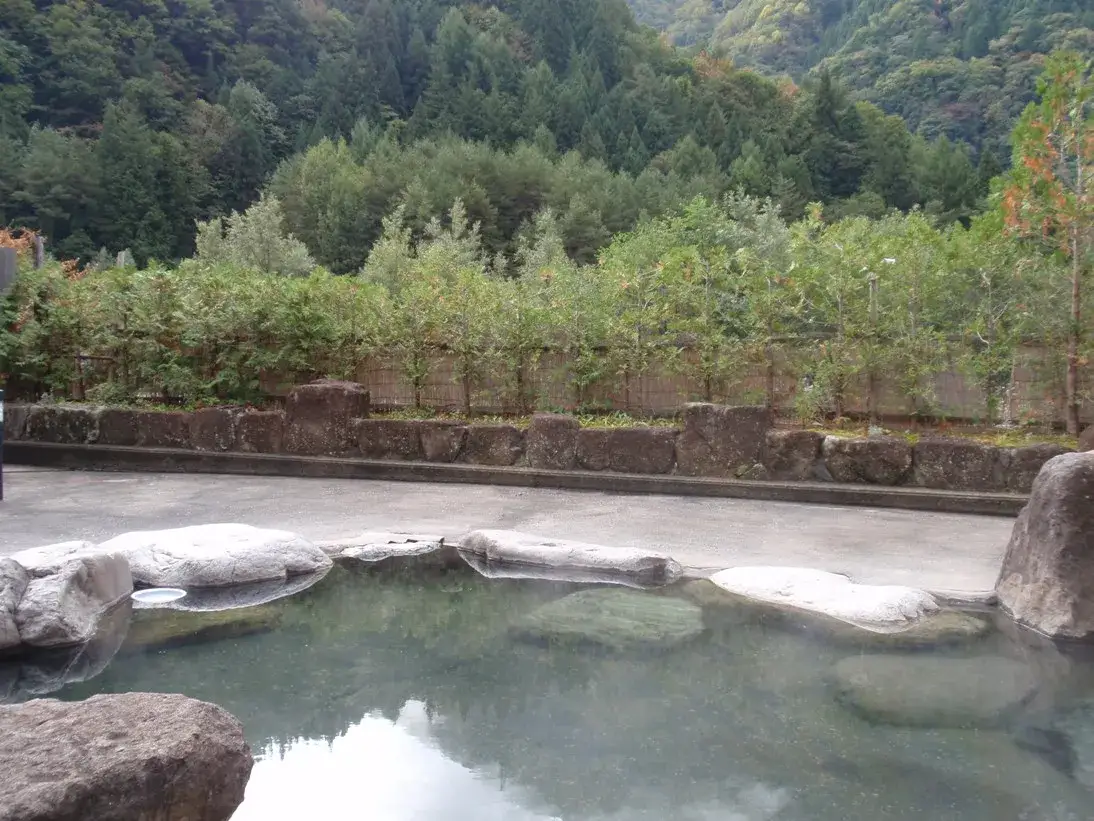
Where should you start comparing outdoor baths in Okuhida?
Start with the tourism association’s current bathing information and the individual operator’s page. Hirayu no Mori is a dedicated facility to investigate for open-air bathing, while outdoor baths at ryokan require a separate check of guest access. Public riverside baths have their own conditions and should be researched individually. The names Kojin no Yu in Tochio and Shinhotaka no Yu may appear in outdoor-bathing research. Do not infer current operation, showers, changing space or mixed-bathing arrangements from the name alone. Use the relevant official listing and check close to the visit, particularly when weather or river conditions may affect access.
For an overnight trip, compare the bath with the rest of the stay. A dramatic outdoor setting is less useful if the room, meal plan or arrival journey does not work. For a day visit, choose the facilities you need before scenery. The day-use onsen guide helps separate public admission from baths available only as part of a hotel reservation.
Does an outdoor bath provide privacy from other visitors?
Only the facility’s design and operating rules establish privacy. The word rotenburo does not promise screening, an empty pool or exclusive use. A carefully framed photograph can conceal the changing area, neighbouring baths or the route other visitors use.
Ask about the specific concern rather than requesting a vague private experience. You might need exclusive use for a couple, a family changing arrangement, a screened outdoor pool or a room-attached bath. Those are different requirements. If you need a guarantee about the room category, match the written answer to the exact booking plan.
Remember that a quiet-looking bath can still be communal. Do not take photographs once other guests enter or assume a temporary absence gives permission to record the bathing space. If bathing together is important, verify the relevant rules before reserving. A mixed bath may permit different genders to enter but still provide none of the exclusivity that a couple or family expects from the phrase private onsen.
What should you confirm before using a mixed bath?
Confirm current admission, clothing rules, changing arrangements and any separate periods or restrictions. Do not assume that swimwear is accepted, that a modesty garment is provided or that towels may enter the water. Rules can differ between facilities, and a general article cannot replace the operator’s instructions.
Ask how your party will change and enter comfortably. A shared bathing pool does not necessarily imply a shared changing area, and a traditional arrangement may not suit every visitor. If someone is uncomfortable, choose a different format before arrival rather than treating participation as a necessary part of an Okuhida holiday.
A confirmed kashikiri bath is often the clearer comparison for people who want to bathe together privately. For tattooed travellers, ask about admission separately; mixed bathing does not establish tattoo acceptance. Use the tattoo planning guide to prepare the questions. The aim is to understand a particular facility, rather than applying one bathing custom to every outdoor pool in the valley.
How do shared private baths differ from room-attached baths?
A shared private bath gives one party exclusive use at a time, while a room-attached bath belongs to a particular accommodation category. Shared private baths may use reservations, reception allocation or a first-available system. A room description must explicitly establish whether the attached bath is an onsen.
Ask how to obtain a slot, how long the complete visit may last and whether the arrangement includes washing and changing space. If bathing is the main reason for the stay, consider whether waiting for a shared facility fits your expectations. An included shared bath is not automatically a reserved appointment at your preferred time.
At Yumoto Choza, the official bath page describes several bathing formats and an availability-panel method for certain private baths. Check the property notices as well as that general description, because individual areas may be restricted. The Choza booking guide explains what to confirm before selecting a room around those facilities.
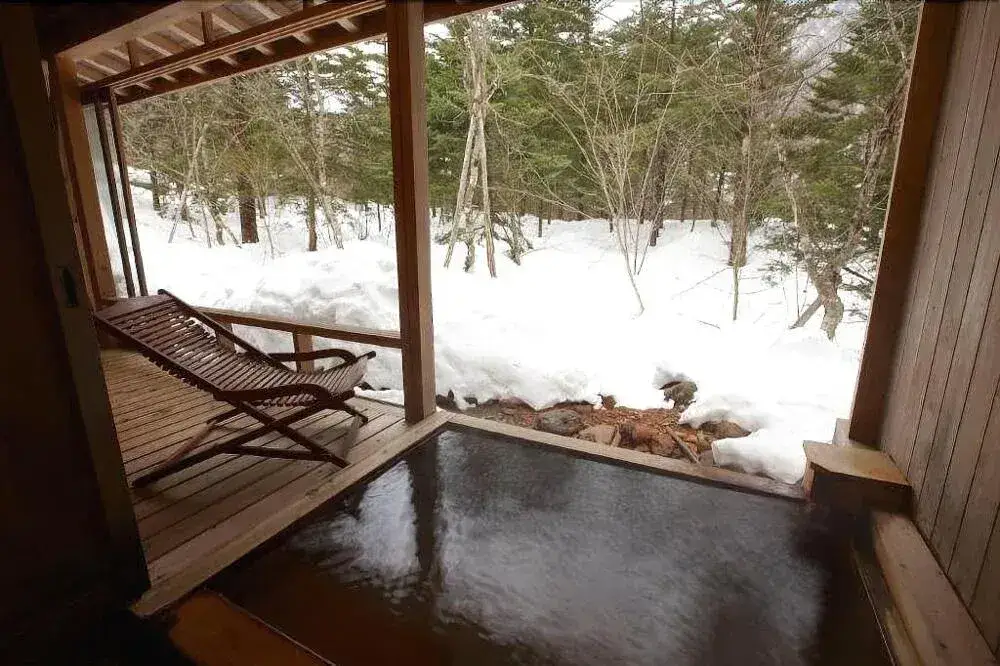
What changes when you bathe outdoors in winter?
Winter changes the approach, changing routine and comfort of the outdoor area. Confirm which baths and paths are open, then prepare for moving between warm indoor spaces and cold outdoor surfaces. A snow-framed photograph does not establish that every pool remains available throughout the season.
Ask whether the route involves steps, exposed decking or a separate walk from the building. Footwear and staff instructions matter around slippery surfaces. Do not assume a robe or indoor slippers are suitable for every outdoor path. For a riverside or public bath, check whether changing and storage arrangements meet your needs in cold weather.
Keep the experience flexible if the conditions are uncomfortable. You can choose an indoor bath or a shorter outdoor visit without losing the value of the stay. Avoid planning a remote winter bathing stop around the final bus. The Okuhida winter guide is useful for the transport context, while the individual facility must confirm which outdoor areas are currently available. ## Which etiquette rules matter most in a rotenburo?
Follow the same considerate bathing routine as indoors, together with any rules specific to the outdoor space. Wash before entering where facilities are provided, keep towels and hair out of the pool and respect the operator’s instructions. An informal natural-looking setting does not make the bath an unrestricted swimming area.
Keep voices low enough for others to enjoy the setting and avoid splashing or using the pool as a play space. Put belongings where instructed rather than on a path or pool edge. Photography should not intrude on changing or bathing privacy; a scenic view is not permission to record other guests.
If the bath has limited washing facilities, ask how the operator expects visitors to prepare. Do not improvise with soap in the pool or river. Read the onsen etiquette guide before a first visit, then follow the local signs. The practical goal is simple: enter clean, use the space respectfully and leave it ready for the next visitor.
How should couples, families and first-time visitors choose?
Choose the bathing format before choosing the photograph. A first-time visitor may prefer a facility with clear washing and changing arrangements. A couple seeking privacy should compare confirmed exclusive-use options. A family needs age, supervision and changing rules that work for every child.
Write the non-negotiable requirements down before browsing. These might include a private slot, no outdoor walk between buildings, a suitable child policy or a room-attached onsen. Ask the property to answer those points directly, then compare the room and meal plan. Avoid paying for the word outdoor while leaving the actual privacy arrangement unresolved.
If you are unsure about communal bathing, do not make a mixed public bath the first compulsory activity of the trip. You can build confidence with a suitable private arrangement or choose a day-use facility whose rules are clear. The best rotenburo is the one whose setting and operating format both fit your party, leaving enough time to enjoy it without transport or dinner pressure.
Can you choose a bath purely from photographs?
Photographs are useful for understanding the setting, but they cannot confirm admission, privacy or the current operating arrangement. A tightly framed outdoor pool may look secluded while belonging to a public bathing area. An accommodation gallery may combine photographs from several baths and room categories.
Read the caption and identify the named facility. Ask whether the image shows the bath included in your plan and whether it is currently available. If the photograph belongs to another property or illustrates a nearby village, treat it as context rather than evidence about the facility you are booking.
For a first visit, match the written details to your practical needs: washing, changing, exclusive use if required and a comfortable route from the room or reception. The scenery should support a suitable arrangement, rather than distracting from unresolved essentials. A clear answer from the operator is more useful than several attractive photographs when the feature you need is a booking rule that cannot be seen in an image.
How should you schedule outdoor bathing around the rest of the stay?
Leave a flexible interval rather than making every bath fit between a late excursion and dinner. Ask how the property’s bathing schedule and private-use system work, then organise optional sightseeing around the parts of the evening that are fixed.
On arrival, understand where the baths are and what you need to bring before changing. If private baths use an availability system, allow another opportunity later instead of assuming the first choice will be empty. If an outdoor area requires a separate walk, check conditions before committing to it after dark.
Keep departure morning equally realistic. An early mountain bus, breakfast, packing and another soak may not all fit comfortably. Choose which matters most and ask the property about its normal routine. A rotenburo is most enjoyable when the arrangement gives you time to use it calmly. You do not need to visit every pool at a property to get value from the stay, particularly when the weather or your party’s preferences favour a simpler plan.
For a couple choosing between mixed and private bathing, ask the operator to describe who else may enter during your visit. This resolves the central distinction directly. If other guests may join, the arrangement is communal even when the setting looks secluded; choose exclusive use if that is what your party needs.
Where should you go next?
Continue planning with Okuhida day-use baths, Ryokan with private onsen, Tattoo-friendly onsen in Okuhida. Start with the Okuhida travel guide if you are still choosing a village base.
Your questions, answered
Does rotenburo mean mixed bathing?
No. Rotenburo describes an outdoor bath, while mixed bathing refers to who may use it together. Many outdoor baths are separated by gender or booked privately. Ask the operator about the particular bath rather than assuming a Japanese term establishes all the access and clothing rules.
Can I wear a swimsuit?
Follow the instructions for that exact facility and bathing area. Ordinary onsen bathing and some mixed-bath arrangements can have different rules. Ask before entering rather than assuming a swimsuit is allowed because the bath is outdoors, or that the rules at a previous onsen apply here.
Does an outdoor room bath contain hot-spring water?
Do not infer the water source from the shape or location of the tub. Ask whether the selected room’s bath is supplied with onsen water and whether its use is exclusive to your room. Property-level descriptions may refer to a communal bath rather than every guest-room bathroom.
Are riverside baths open all year?
Check each bath’s current operating information and local conditions. An outdoor setting can have seasonal restrictions or temporary closures. Do not use an old photograph or a broad village description as confirmation that a particular pool is available on your date, especially during winter weather or river-related disruption.
Can we take photographs in a private bath?
Ask the facility even when the bath is exclusively assigned to your party. Property rules and privacy still apply, and neighbouring areas may be visible. Keep phones and cameras out of communal bathing spaces unless explicit permission has been given under conditions that protect everyone using the facility.